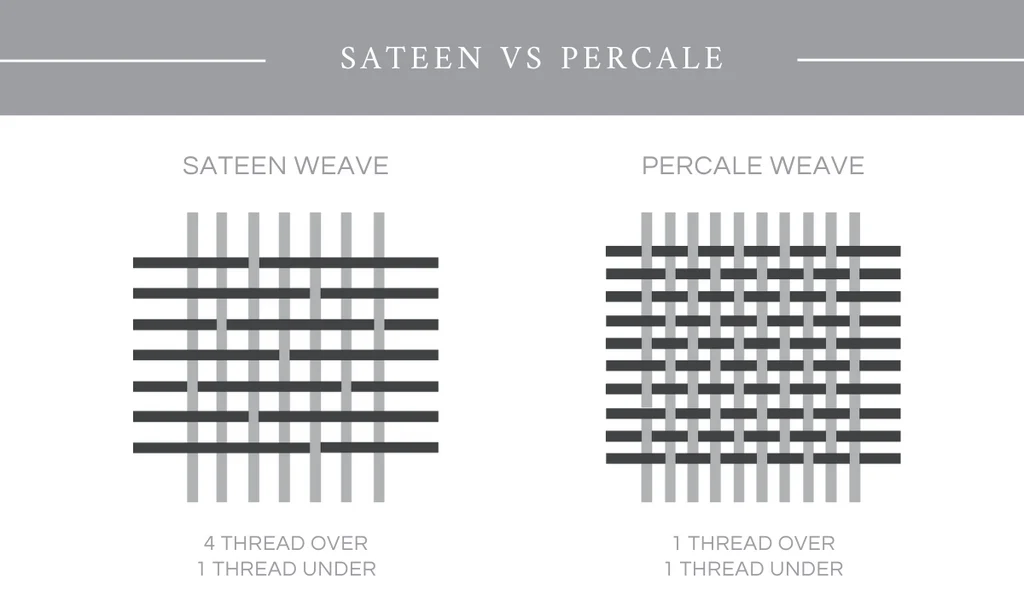
When I first bought bedsheets, I followed my mother’s lead in buying 100% cotton percale. I had no idea what percale meant, but it is a simple one-over, one-under crisscross grid weave pattern. To those familiar with weaving, the warp and weft threads alternate equally.
Eventually they wore out, and I wanted something smoother. I liked the feel of a sateen weave of four threads over and one under, which is more fluid and relaxed. It sleeps warmer than percale but is still breathable.
I’d always heard of silk sheets as being luxurious, but I found them far too slippery. I felt like I might slide out of the bed at times, and they would never work once I started elevating the head of the bed to reduce acid reflux. So I stuck with a sateen weave, but switched to rayon. Polyester is entirely synthetic plastic fiber derived from petroleum and is generally stiffer and sleeps warmer than rayon, which is a semi-synthetic plant-based fiber. However, even after choosing rayon, I had several forms of rayon to choose from, and some trademarks to wade through.
The earliest form of rayon was viscose, which has more breathability than cotton, but its manufacture is quite polluting. Wood pulp, which might be from beech, pine, eucalyptus, or bamboo, is dissolved in solvents like sodium hydroxide into brown wood pulp. That is washed, cleaned, and bleached. It is treated with carbon disulfide and then dissolved in sodium hydroxide to create viscose, which is forced through a spinneret into fibers of regenerated cellulose, which is spun into yarn and then woven or knit into viscose rayon fabric.
Modal came next, modifying the viscose process for beechwood pulp by using lower concentrations of sodium hydroxide and an extra stretching phase to align the molecules tightly, followed by specific heat treatments.
Lyocell is the most recent form. It again starts with wood-based cellulose, usually eucalyptus trees, which are chipped into small pieces and broken down into wood pulp which is dissolved in a non-toxic organic solvent. The pulp is then spun into continuous fibers that are woven into yarn. The closed-loop manufacturing system captures and reuses up to 99% of the water and solvents, making it much more environmentally sound than the manufacturing of viscose or modal.
Finally, TENCEL™ is a trademark of Austrian Lenzing AG that is applied to both lyocell and modal fibers of rayon.
All forms of rayon dissolve the wood pulp, so any antimicrobial properties of the original plant do not survive. Viscose loses strength when wet, so it is more prone to stretch, tear, or shrink in the wash. Modal retains more strength when wet and can often tolerate tumble drying without damage, but it is more expensive than standard viscose and can still pill or stretch over extended, rough wear. Lyocell is the strongest form, holding up quite well to washing, and resists wrinkles, pilling, and bacterial growth. However, it is sometimes the most expensive option, can feel warmer or heavier than viscose depending on the weave, and if it is blended with synthetics like elastane or polyester it loses its eco-friendly biodegradability.
I’ve bought and used sheets of all three types: bamboo viscose, beech modal, and eucalyptus lyocell, typically with 300-thread-count sateen weaves. They don’t hold up as well as cotton percale, but I much prefer them for sleeping. My experience is that rayon sheets, when always washed in cold water and tumbled dry at low temperature, typically last about nine years when used in two sets alternated weekly.
When my first beech modal sheets thinned to where they needed replacing, the vendor no longer offered that fabric, instead steering me to either bamboo jersey or bamboo sateen, meaning viscose. Jersey is stretchy and ultra-soft and is knitted rather than woven. 100% cotton jersey fabrics are breathable, but synthetic blends or rayon jerseys trap body heat. I tried jersey rayon sheets long ago, but they were too hot for sleeping unless it was winter and I kept the house quite cold.
So I bought some bamboo viscose sheets. They were light and have held up thus far with gentle treatment, but when the alternate set of beech modal sheets wore out, I decided to educate myself on the various types of rayon. That led me to spend more on purchasing pure lyocell, rather than viscose or lyocell mixed with viscose. Pure lyocell should last longer and its manufacturing processes are less environmentally damaging.
Viscose rayon derived from bamboo versus lyocell rayon derived from eucalyptus
When I washed the new lyocell sheets, I sensed their greater heft and durability. They were a slightly slicker and warmer than the beech modal they replaced, but I slept soundly in them. So in the future I plan to stick with 100% lyocell rayon made from eucalyptus — no bamboo viscose or beech modal for me.
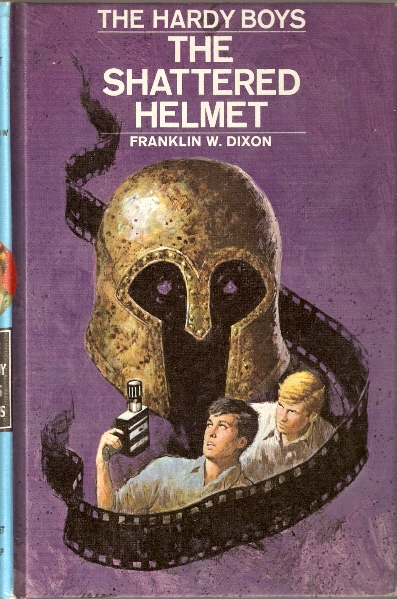
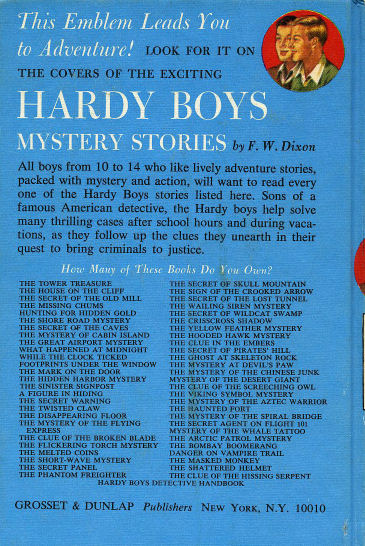
When I was in elementary school, I enjoyed collecting and reading the Hardy Boys mysteries. I accumulated the “picture cover” versions, and by the early 1970s there were over 50, with a new volume released each year. I remember my excitement when #52, The Shattered Helmet, debuted in 1973, and how the annual treat had lost its appeal for me by 1979 when #58, The Sting of the Scorpion, appeared.
I remember when this was first published
That one turned out to be the last of the books put out by Grosset & Dunlap, which had published the series since 1927. Harriet Adams, who with her sister inherited in 1930 the Stratemeyer Syndicate that crafted the Hardy Boys and many other series books, shifted later volumes to Simon & Schuster. So the Grosset & Dunlap era ended as I became a teenager and after I had aged out of enjoying the series. By then, I had figured out that its supposed author, Franklin W. Dixon, did not exist.
The books were aimed at boys ages 10-14, but I began reading them at age 7
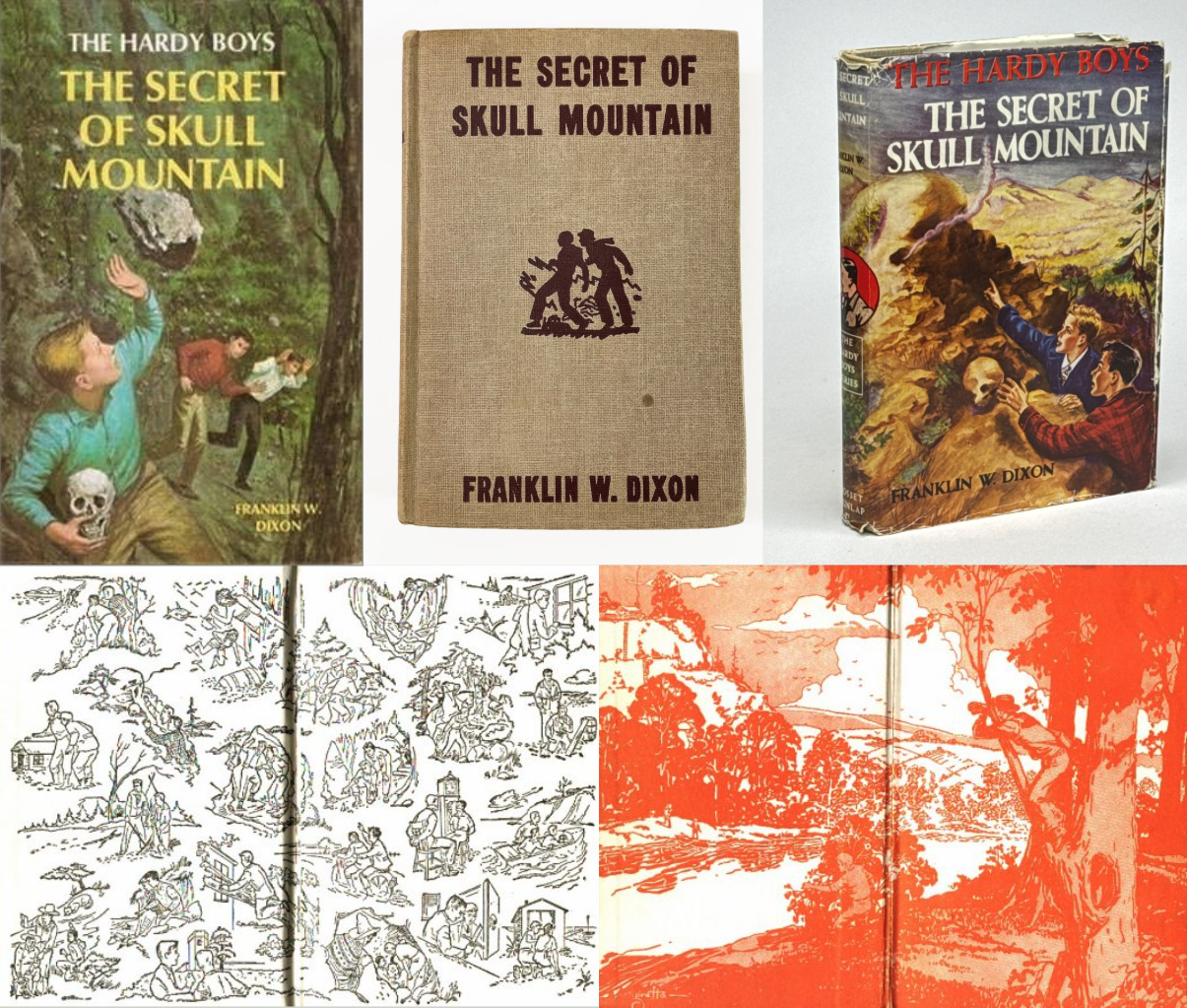
My suspicions had been aroused when I had noticed that the little library room at our church had on its shelves two old editions of #8 The Mystery of Cabin Island and #27 The Secret of Skull Mountain. Instead of blue spines and picture covers, they had plain brown bindings. The interior illustrations were different, including orange endpapers of a single scene, rather than the white multi-scene ones I was used to. I now know that those versions originally had illustrated book jackets.
Cover and endpaper variations were just the beginning
My curiosity was amplified when I realized they were about 210 pages, rather than 178. I began skimming one of them and quickly realized that it wasn’t the same story I had at home. Nonplussed, I checked them out and explored their alternate unreality. While the books I owned had copyright dates no earlier than 1959, the books from the church library were late 1940s editions of books that had been written in 1929 and 1948.
I liked the older versions better, even if they were quite dated in places. They were moodier with more descriptions and slower paced, they had jalopies with running boards and rumble seats, although sadly they were burdened with some repugnant ethnic stereotypes and dialects.
I was highly skeptical that a guy still publishing new books in the mid-1970s had been writing them since the 1920s, let alone revising his own work so heavily. So Franklin W. Dixon must be a pen name for various authors, and clearly some of them wrote under fewer constraints in the days of yore. In fact, the original 58 Hardy Boys and their revisions had over 20 different ghostwriters.
I now know that the 1929 version of The Secret of Cabin Island was written by Leslie McFarlane, who wrote 19 of the books, while the copy I owned was a 1966 revision by Andrew Svenson. The 1948 version of The Secret of Skull Mountain was based on an original version by Harriet Stratemeyer Adams, which was rejected by the publisher. Grosset & Dunlap brought in George Waller, Jr. to rewrite it, and that was his only contribution to the series. However, the edition on my bedroom bookshelf was a third version from 1966 by David Grambs. If you want to delve into various details, hardyboys.us is a great reference on that series.
After discovering there were older versions, I rifled through the collection of an aunt to see if any of her books were original versions and found the 1946 version of #25 The Secret Panel. It had different cover art than the 1969 rewrite I had at home. It turns out that the original version was actually written by Harriet Adams, who had taken over the business in 1942 when her sister got married. Harriet claimed for years that she wrote all of the Nancy Drew books, but legal proceedings in 1980 revealed that Mildred Wirt Benson actually wrote 23 of the first 30 Nancy Drew books, and the first 32 books had six other ghostwriters, although Harriet did write over two dozen of the first 56 Nancy Drews, and she provided outlines for and edited and revised many of the syndicate’s other books.
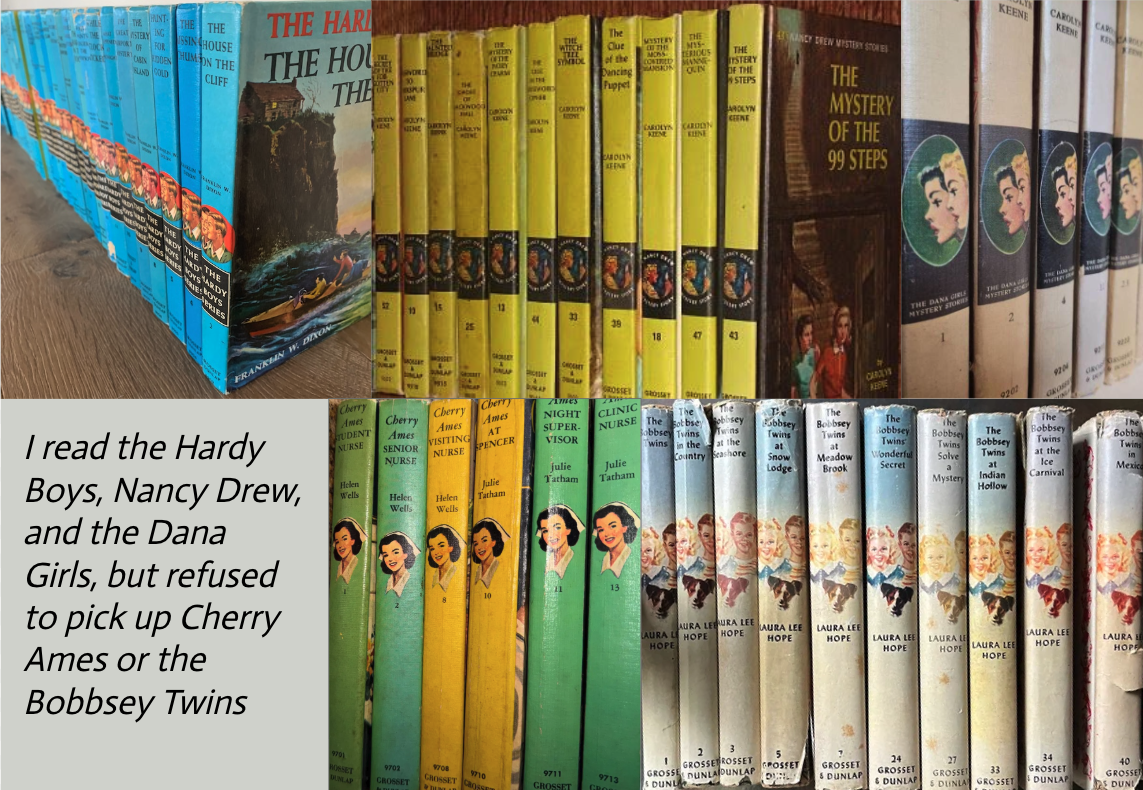
I didn’t have the resources back then to track down additional original versions of the Hardy Boys, and our public libraries didn’t stock the various series, which were considered unworthy. Once I exhausted all of the available Hardy Boys books, my aunt suggested I try her similar series, which were also Stratemeyer Syndicate products. I was willing to read Nancy Drew and the Dana Girls mysteries, but I passed on Cherry Ames, Student Nurse and the Bobbsey Twins books.
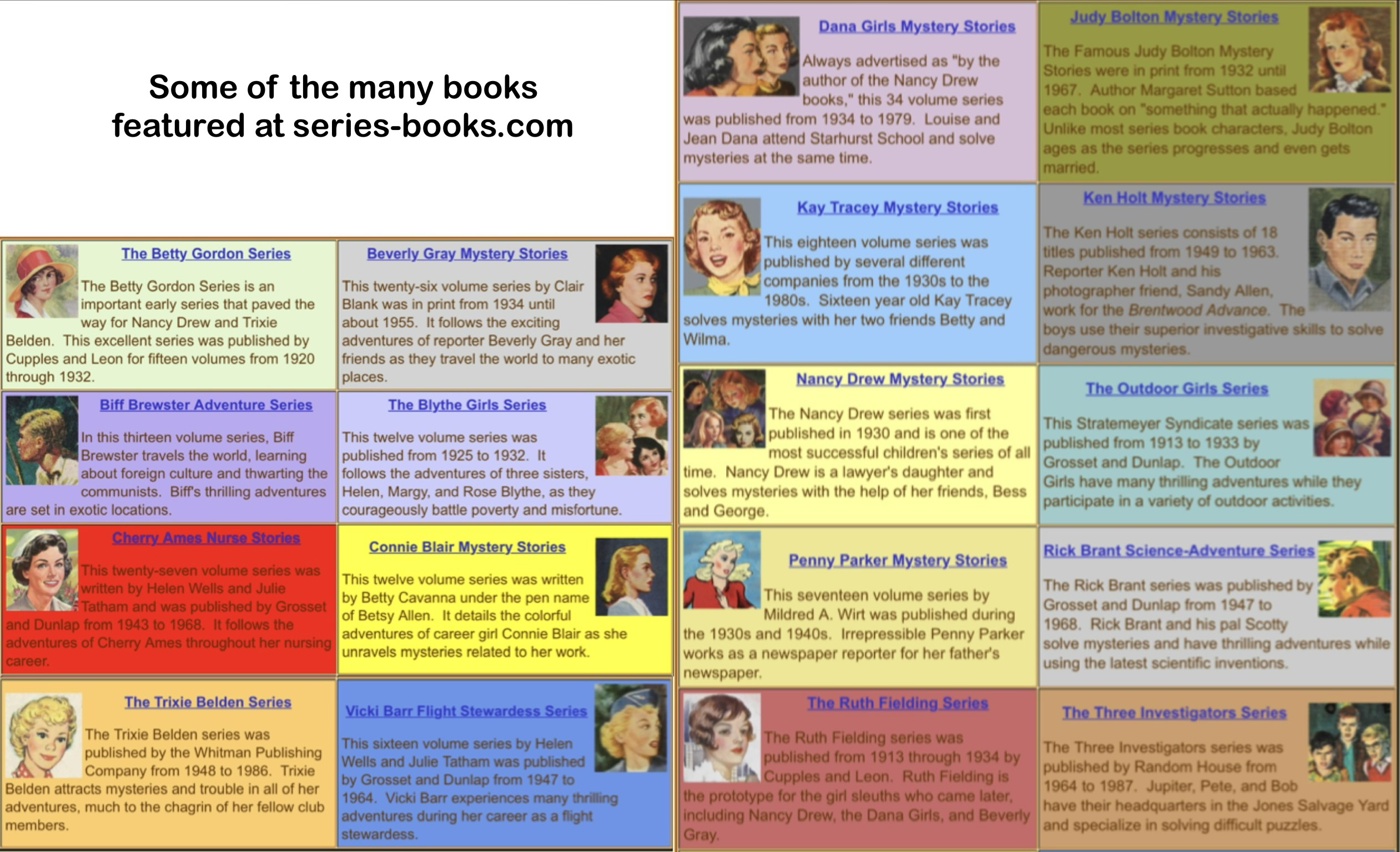
I noticed how Carolyn Keene was credited with both Nancy Drew and the Dana Girls, but I reckoned she was a fake just like Dixon. Decades later I learned that Leslie McFarlane not only wrote most of the early Hardy Boys, but also Dana Girls #1 through #4, and that series was then taken over by Nancy Drew author Mildred Wirt Benson for #5 through #16. I gleaned those truths at series-books.com, which delves into dozens of series, focusing more on the series targeting girls but also covering a few series meant to appeal to boys.
My aunt also had a collection of Trixie Belden books, which were a breath of fresh air in comparison to the formulaic Stratemeyer Syndicate series. The first six Belden books were written by Julie Campbell Tatham, offering more characterization and serialization, although after that they had ghostwriters using the collective pseudonym of Kathryn Kenny, and they became more episodic with quirky variations.
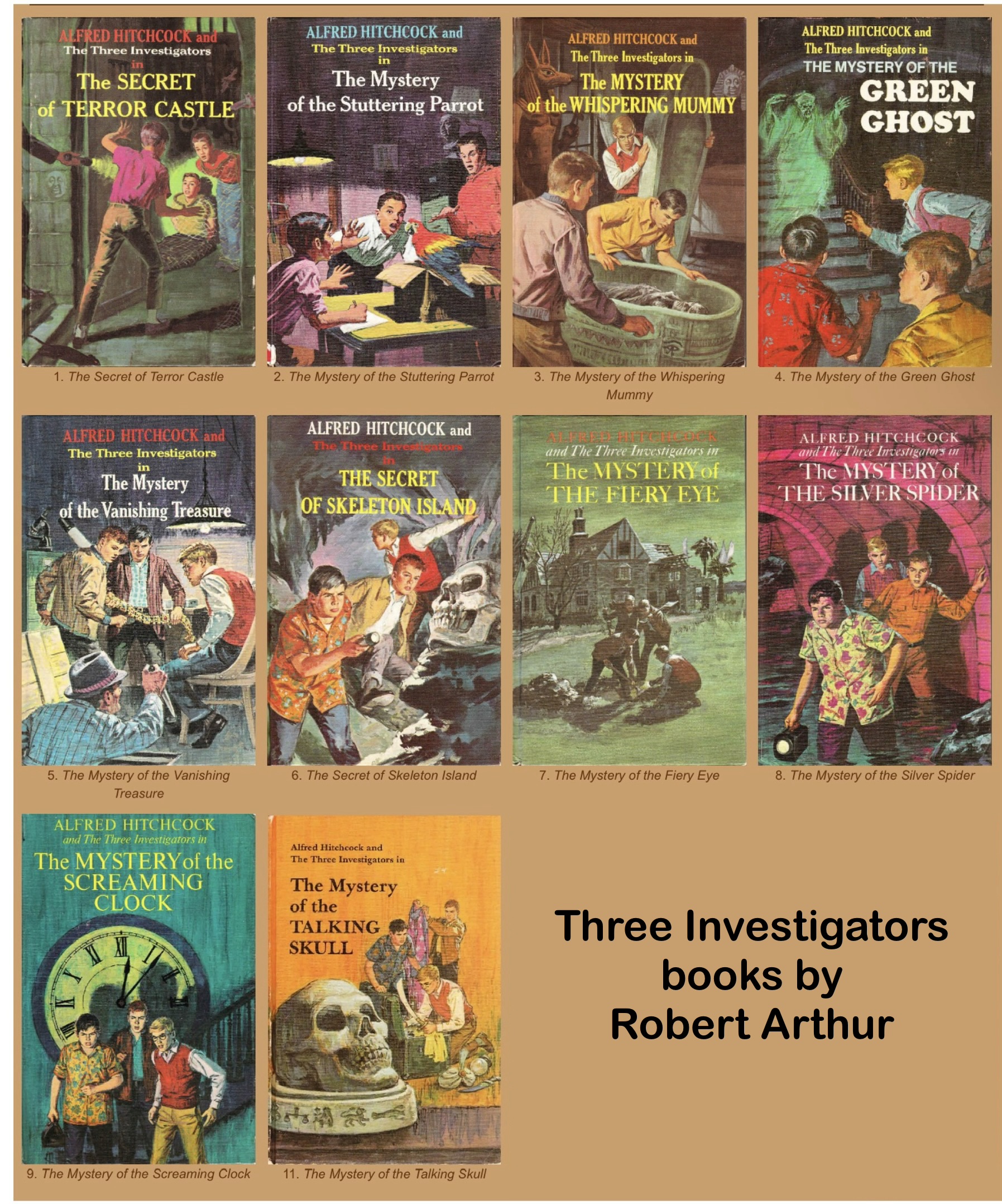
My favorite children’s series, which I discovered in the library at my junior high school, was Alfred Hitchcock and the Three Investigators, which boasted consistent high quality under original author Robert Arthur, with more variation after his death when a handful of other writers took over. Unimpeded by the formulaic plot outlines, deadlines, and low pay that crippled the Stratemeyer Syndicate’s ghostwriters, Arthur’s works were far more creative with stronger characterization.
The series began in 1964 and Arthur produced ten entries before his death in 1969. The primitive card catalog at my junior high didn’t have series cards, and the later series entries were shelved according to the various author names: William Arden, Nick West, M.V. Carey, etc. So it took some minor sleuthing of my own to track them down across the library. The internet now tells me that William Arden was actually Dennis Lynds, Nick West was Kin Platt, and M.V. Carey was Mary Virginia Carey. In Mary’s case, the publishers worried that a book explicitly written by a woman might deter young male readers, so they used her initials, much as Dorothy Catherine Fontana, one of the best writers of Star Trek, wrote as D.C. Fontana due to sexism in television production.
After Alfred Hitchcock died in 1980, the series substituted a fictitious Hector Sebastian for the investigators to interact with or to introduce the stories, and in 1984-1985 the first thirty books were reportedly revised to replace Hitchcock with Sebastian or, for the first book, a Reginald Clarke. The original series went out of print in 1987, with Random House revamping it with older characters and more action in 1989, but legal issues halted that revival in 1990. Interestingly, the series was very popular in Germany and spawned hundreds of additional titles, radio dramas, and several movies in Deutsch.
Judy Bolton
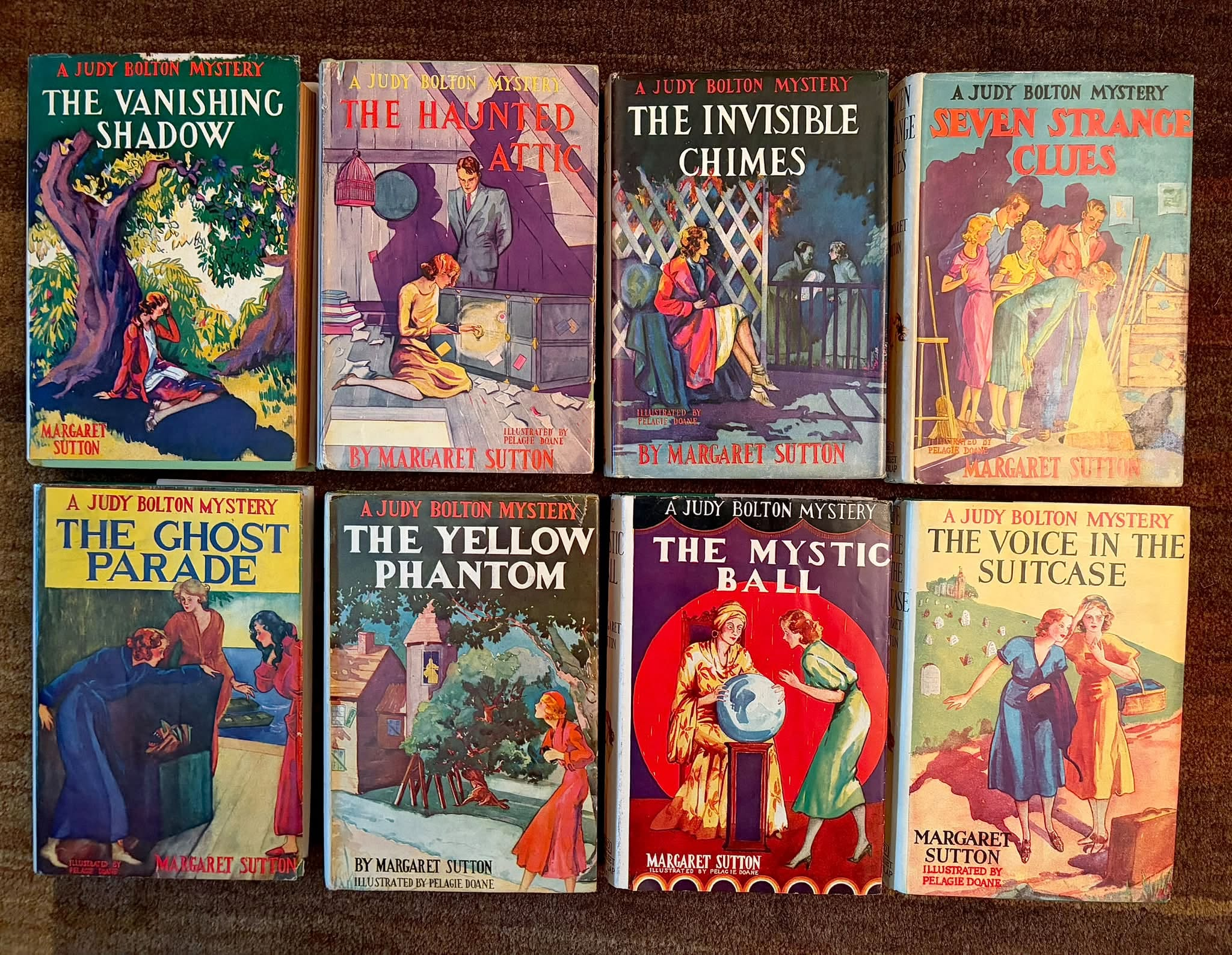
Recently I re-read the first of the Nancy Drew mysteries, The Secret of the Old Clock, which entered the public domain this year. The internet picked up on that once I posted about it in my blog and Facebook started surfacing posts about old Grosset & Dunlap children’s series. One post caught my eye: it showed the covers of the first eight Judy Bolton books.
The Facebook post that caught my attention
I’d never heard of this series
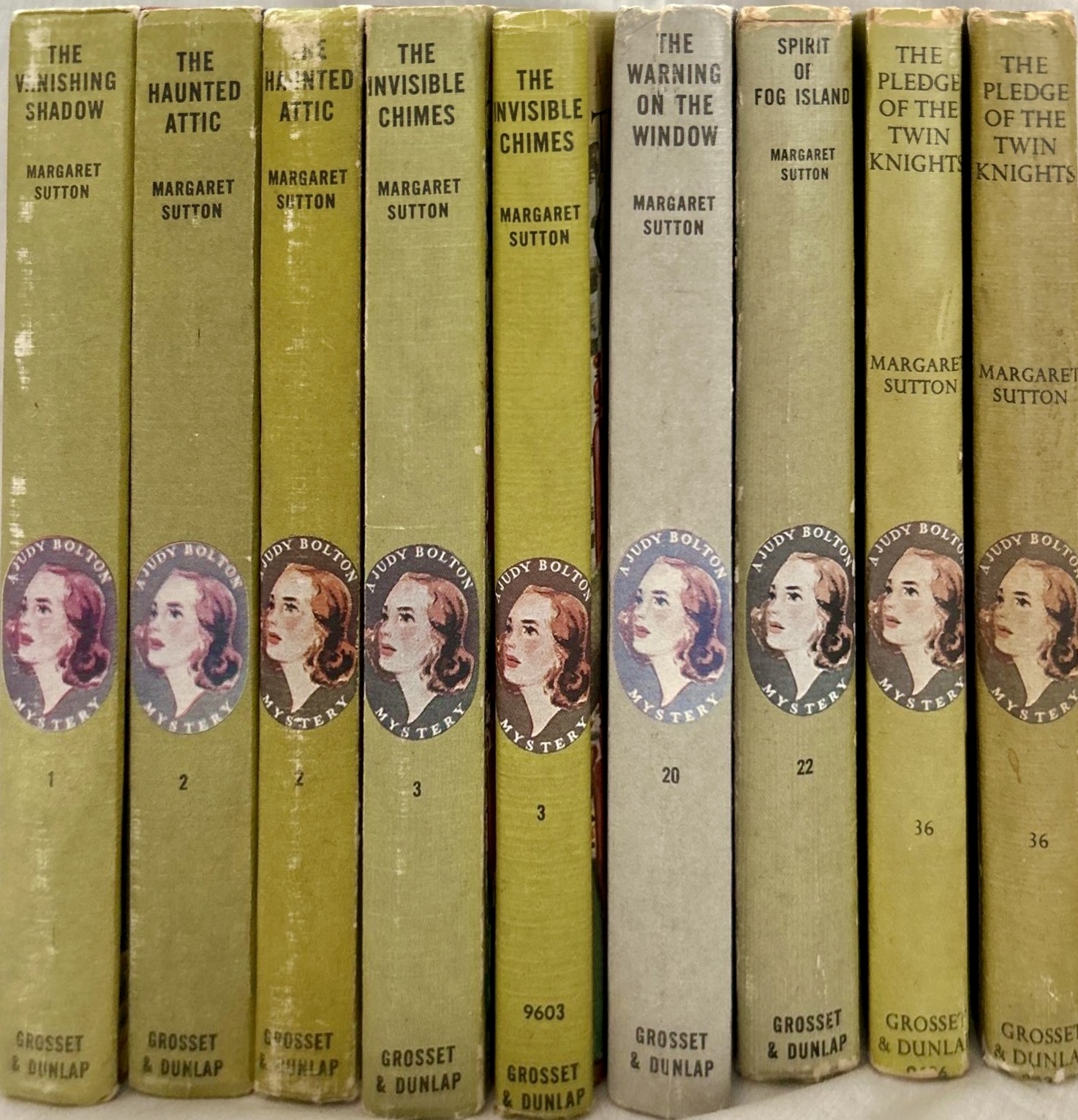
Judy Bolton? I knew about Judy Barton from Hitchcock’s Vertigo, but I’d never heard of Judy Bolton. A quick internet search revealed it was yet another Grosset & Dunlap series, but with olive green spines for its picture cover editions rather than Nancy Drew yellow, Hardy Boys blue, or Dana Girls beige, and a different shade of green than had been used for Cherry Ames. The Bolton books were attributed to Margaret Sutton. I was curious as to who might have actually written them. Did the ghostwriters include Benson, McFarlane, or others?
Margaret Sutton wrote the Judy Bolton books for 35 years
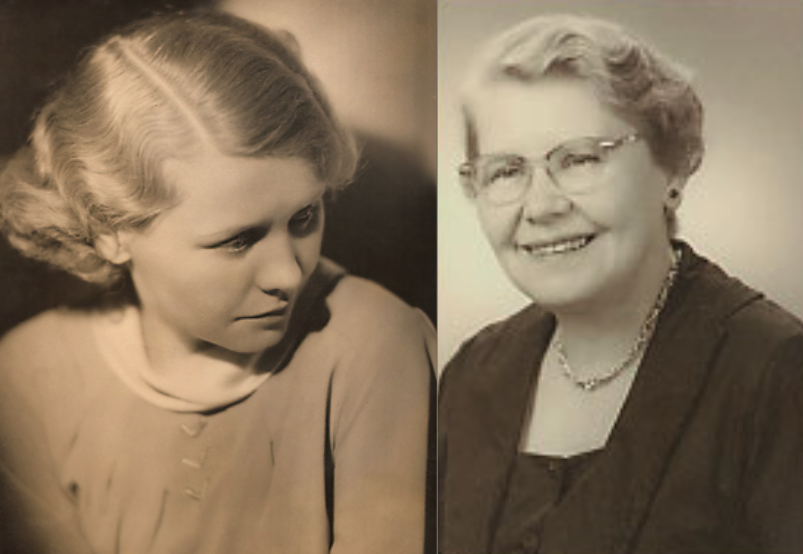
I was surprised to read that Margaret Sutton was a real person, albeit born as Rachel Beebe, who had married a Sutton and perhaps legally changed her first name to Margaret after her books became popular to better secure her rights. She wrote the entire series from 1932 to 1967, and despite it being published by Grosset & Dunlap, it was not a Stratemeyer Syndicate product.
Sutton’s books did not conform to the syndicate’s norms after she successfully fought the publisher’s editors over having her Judy Bolton character age from a 15-year-old girl in the first book to a married woman in her early 20s by the end of the series, while most Stratemeyer characters barely aged at all. Judy Bolton visibly grew up, graduated from high school, worked as a secretary, and by book 11 was engaged to one of the two guys interested in her in the earlier volumes. They were married in book #17, and Judy continued to have adventures while married to her FBI agent husband, although the editors never agreed to Sutton’s desire for Judy to have children. Sutton did manage to have the young couple take in a little girl for a few volumes. She set the stories in her home state of Pennsylvania, without naming it explicitly, and drew upon various personal experiences for inspiration.
About four or five million of the 38 Judy Bolton adventures were sold over the decades, with admirers praising the books’ continuity and character growth compared to the Stratemeyer Syndicate offerings. However, Nancy Drew and the Hardy Boys were always big sellers, and Sutton was convinced that the syndicate pressured Grosset & Dunlap into eventually dropping non-syndicate series.
Since I had just re-read the first of the Nancy Drews, I decided to read the first of the Judy Bolton books for a comparison. However, The Vanishing Shadow won’t enter the public domain until 2028, and I wasn’t willing to fork over $12 or more for a used copy on Amazon or AbeBooks. So I borrowed an online copy on the Internet Archive.
Oh dear. I recognize there are Judy Bolton fans out there, and at least one of her daughters is still alive and hosting an annual fan event in Pennsylvania. More power to them, but I was anything but impressed.
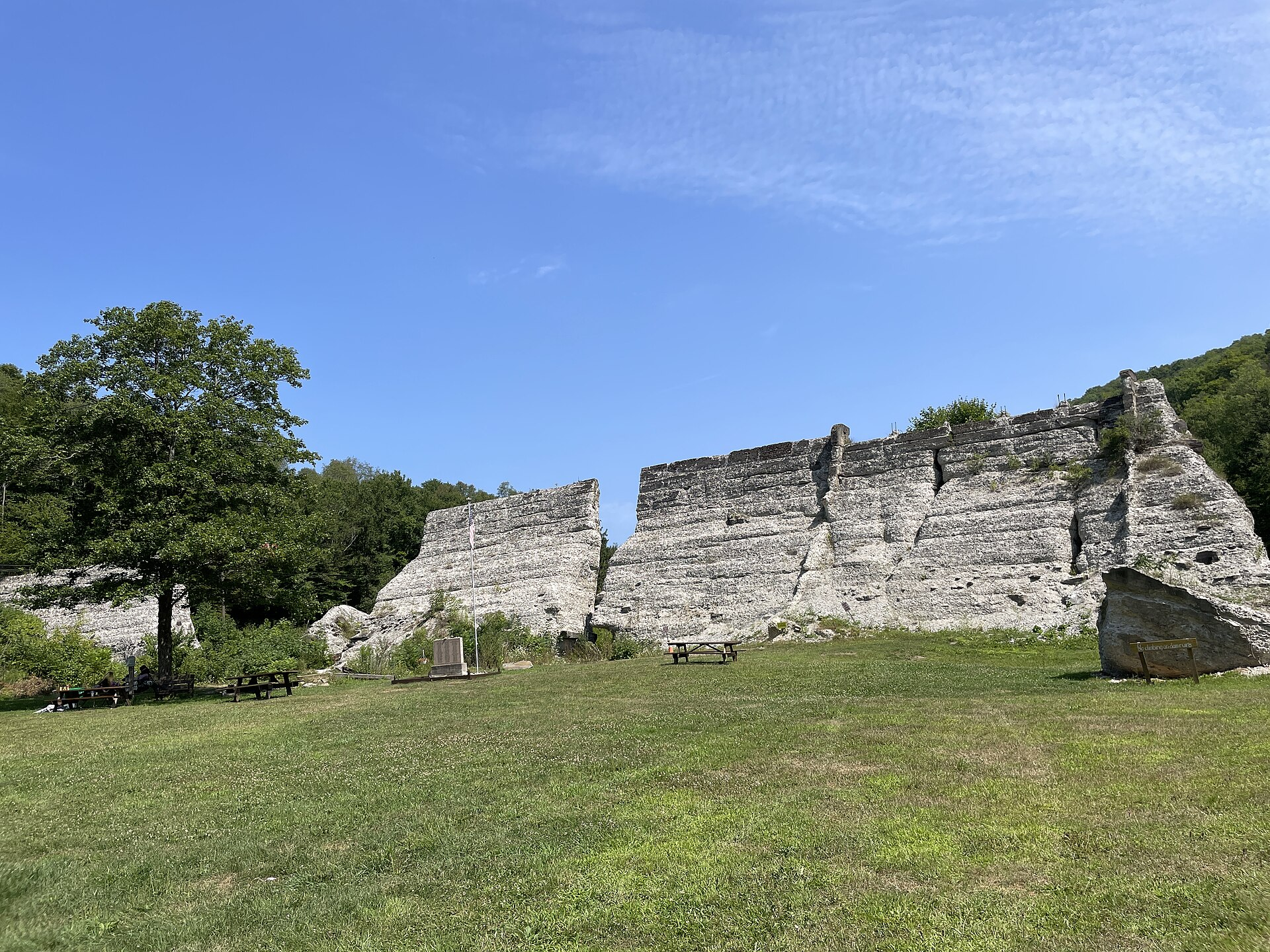
The book began in 1930 as a manuscript entitled Melissa of Dry Brook Hollow or The Great Roulsville Flood. Sutton had drawn inspiration from the catastrophic failure of a concrete dam in Austin, Pennsylvania in 1911. That dam was commissioned by a paper mill and designed to be 30 feet thick, but it was built only 20 feet thick and lacking an underground slab to prevent soil seepage. Water seeped under it, the dam developed large cracks, which were falsely attributed to drying concrete, and a week of rainstorms led to its failure less than two years after its completion.
Dozens of people were killed and property damage amounted to ten million dollars. The madam of the town’s brothel saw the failure coming and warned the town. Sutton would put a flawed dam and a paper mill in her story, but she would have Judy’s cowardly brother be the one warning the townsfolk.
To satisfy the editors, Sutton changed her heroine’s name from Melissa to Judy and added a silly episode with the criminals abducting and imprisoning Judy until she promises not to talk about them. That subsequently makes Judy seem rather irresponsible in not adequately warning others of the danger represented by the dam, although it could illustrate a youngster still in an early stage of moral development.
There were other weird issues, such as Judy receiving anonymously a bunch of tickets to a spelling bee and dance. It is unclear why she would need to still pay for one or more of them at that point, why they would be sent anonymously, and did spelling bees often have associated dances back in the day?
At one point, she destroys a makeshift dam to restore water to Dry Brook, only to later find that will increase the pressure on the substandard concrete dam. The plot sets things up for her and some new friends to try to redirect the brook, but they fail to act before a rainstorm dooms the town.
A little cat is introduced and then lost in a side plot that contributes little to the tale. Later revisions of the book reportedly addressed those various shortcomings, but the lapses show how inexperienced Sutton was. In an interview in 1984, she was asked if she had a favorite Judy Bolton book. She replied: “I don’t have a favorite. There are some that I know aren’t quite as good as others. For instance, The Vanishing Shadow wasn’t quite as well written because I didn’t know about viewpoint; I’d never studied writing, and I’d shifted over the viewpoint quite frequently in that book.”
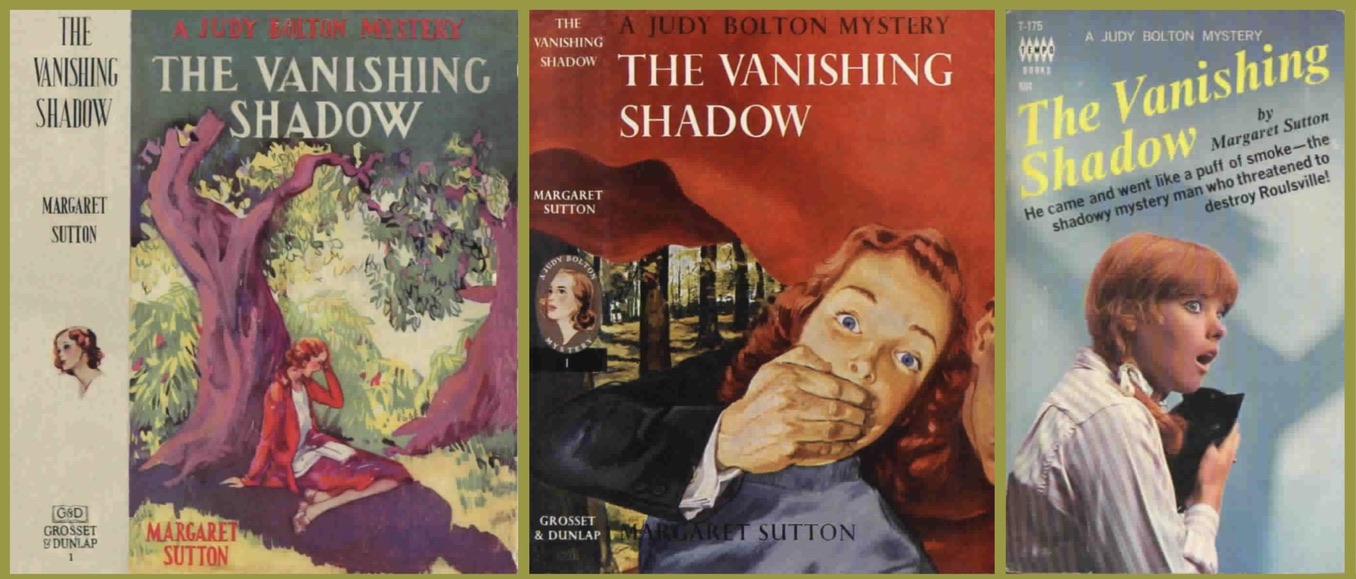
Over the decades the novel reportedly underwent revisions in its text, not just its outward appearance
While Nancy Drew had a kind and supportive father who assisted her adventures, in this first outing Judy’s grandparents are off-putting and her parents almost entirely sidelined. Judy herself is often unpleasant and unlikable. She is mean to her timid brother, who is an annoying coward who undergoes some character growth only to have it undermined in a lengthy and tedious exchange with reporters about his townspeople-saving exploit.
The criminals’ motivations are confused, with a bizarre twist in which (spoiler alert) the smartly dressed guy with a sporty roadster that many girls in town want to ride with is revealed to be wearing a wig, pink nail polish, rouge, and penciled eyebrows to disguise his normally bald and ghostly pale appearance. Why he is spotted at one point riding a bicycle without his disguise is never properly explained, merely serving as a spooky interlude.
Some fans recommend trying out a much later book in the series, but that goes against the continuing character growth and chronological storylines that are the strengths of the series. While I disliked it, The Vanishing Shadow is still a better read than some of the many series books I read in my youth. Sutton did far better with it than poor Dr. John Button did in the abysmal original version of Hardy Boys #19 The Disappearing Floor. Button haplessly followed a bizarre 10-page plot outline by Edna Stratemeyer Squier, who shortly thereafter left the syndicate in the hands of sister Harriet, who had James D. Lawrence write a completely new version in 1964.
My own preferences are Three Investigators > Trixie Belden > Hardy Boys > Nancy Drew > Dana Girls, emphasizing the early original books in each series over their uneven later additions and revisions. If I read more of Judy Bolton, I suspect she would land somewhere below Belden, but I’ve no incentive to confirm that. When I need an easy escape, I’d much rather read adult light fare by Mary Stewart or Edith Pargeter.
Lately I’ve seen many vintage photographs being shared online that were colorized and sharpened by artificial intelligence services. Some are impressed by the results, yet too often oblivious to the many inaccuracies being introduced. The guesses by the AI often go far beyond coloration to hallucinate text, architectural features, and more.
The sad and inevitable result is a worsening pollution of history with false information. As AI feeds on its own output, the introduced hallucinations could become entrenched, being repeatedly misreported and misrepresented as factual. I’ll illustrate my concern with a recent social media post with undoctored and AI versions of a photograph of downtown Oklahoma City from the mid-1960s.
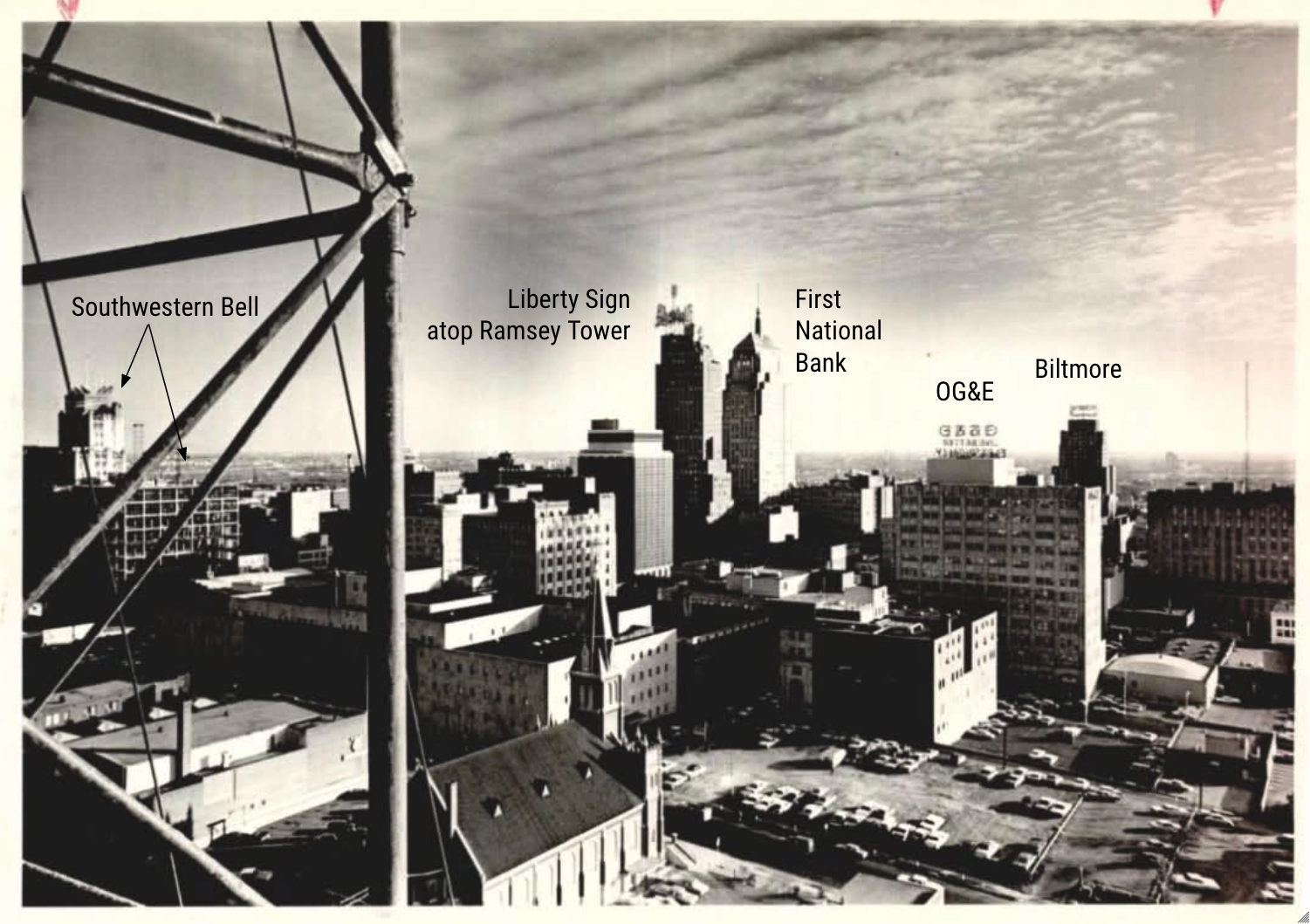
In the original photograph, at far left through the scaffolding you can see the top of the 1927 Southwestern Bell building, readily distinguished by four microwave horns which were built atop it in 1952 to link with Kansas City and Dallas. Beside it the adjacent Dial Building was under construction, which would soon be filled with massive electromechanical switching equipment, and that is how I know the photograph is from 1964 or 1965.
1965 photograph of Oklahoma City with my later annotations
The 1931 Ramsey Tower and First National Bank are in the center, with the Ramsey topped by a large illuminated sign for Liberty Bank atop it. To the right is the OG&E building, topped with a large illuminated sign that showed OG&E on the side facing the camera and on the reverse had OG&E and below that it read “live better” and “electricity”. Farther right was the Biltmore Hotel with its own illuminated sign up top.
I appreciate someone sharing that on Facebook. However, they posted alongside it a version that had been colorized and sharpened using AI. At first glance, some might think that was an improvement. However, as a native of Oklahoma City, I immediately noticed multiple glaring errors.
This “enhanced by AI” version had some weird hallucinations
Most, but not all of the Ramsey Tower’s masonry walls had been changed into dark glass curtain walls. The red cursive Liberty sign had become some sort of antenna gobbledegook. The First National Bank’s sloping roof with its large skylights and distinctive beacon had been entirely replaced with hallucinated versions, while the masonry walls had the wrong color and the vertical aluminum spandrels between its floors of windows had become masonry.
Even more noticeable was what the AI did to the OG&E building, changing its sign to advertise GEBO VITAMILK while Hotel Biltmore became CITY scribble.
As for the Bell building at the far left, its microwave horns were misinterpreted as steel members being erected by a rooftop crane.
I realize that people are going to continue to pollute social media and other online sources with countless doctored photographs that misrepresent our past. However, I urge you to extend your skepticism of online content to account for this expanding and pernicious AI slop.
Paramount is the sixth-oldest surviving film studio globally, and the last major film studio still headquartered in Hollywood. In August 2025, it became part of Skydance Media, and by late 2026 Skydance controlled Paramount, Warner Bros., CBS, CNN, HBO max, and various other entities.
Some of the major entities that have become part of Skydance
That includes a wide variety of cable television and other franchises.
Even more Skydance properties
This massive footprint spanning legacy film studios, broadcast and cable networks, and streaming services makes it a behemoth rivaling the Walt Disney Company and Comcast. In the 1930s and 1940s, the “Big Five” movie studios were MGM, Paramount, Warner Brothers, 20th Century-Fox, and RKO. Now there will be just four, consisting of Walt Disney, Universal, Sony Pictures, and Skydance’s with its Paramount & Warner Bros. brands.
However, the future of Hollywood is very much in doubt. AI-driven production, digital creators, and global tax incentives have vastly curtailed Los Angeles-based production. Linear and cable television are collapsing in favor of on-demand streaming, which became the majority television medium at the end of 2025, capturing 54% of all views.
Gardner Magazine’s analysis of the TV transition [Source]
To complete the merger, Skydance agreed to release at least 30 theatrical movies per year in the U.S. for the first two years of the consolidation, and 32 annually in years three through five. It agreed to spend an additional $300 million annually in domestic U.S. film production above prior baseline levels, and wide-release films will maintain a 45-day exclusive theatrical window before arriving on subscription streaming services.
But those are just temporary measures, and cinemas seem destined to become niche markets like broadcast and cable television. About 5,000 U.S. movie theaters have closed since the COVID-19 pandemic broke regular in-person attendance habits, and rising secularism and isolation have been accelerated by the internet and home/personal viewing technology. Hollywood is far from alone in losing audiences. We are already seeing larger-scale live musical performances, national Broadway tours, symphonies, and the like increasingly concentrate in large urban venues. Smaller live-performance auditoriums across the nation will continue to fail, alongside about 100,000 churches.
Billionaire Larry Ellison and his son, David, are betting that they can funnel the output and content libraries of the various Skydance properties into its streaming services to survive and thrive amidst all of the turmoil. But the $80 billion in debt their acquisitions have accumulated will require at least $6 billion in aggressive cost-cutting and operational “synergies” and thus what remains of Hollywood will be decimated, even with five years of legal protections.
Past Crises
Paramount is no stranger to crises. It began in 1912 as the Famous Players Film Company founded by Adolph Zukor and Daniel and Charles Frohman. They made a distribution deal in 1914 with Paramount Pictures Corporation, founded that year by a Utah theatre owner, and it became the first successful nationwide movie distributor.
The Great Depression
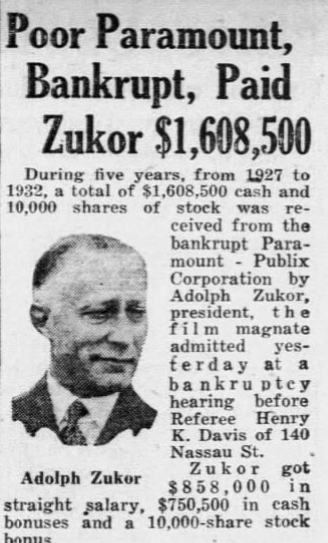
Paramount went bankrupt in 1933
Between 1930 and 1933, weekly movie attendance plummeted 40%. Each of the studios owned significant theater chains, and parts of both Paramount and RKO were forced into corporate receivership. Theaters lowered ticket prices, introduced double features, and slashed most production worker salaries by 50%. That led writer and actors to organize into the Screen Writers Guild and Screen Actors Guild.
U.S. v. Paramount Pictures, Inc.
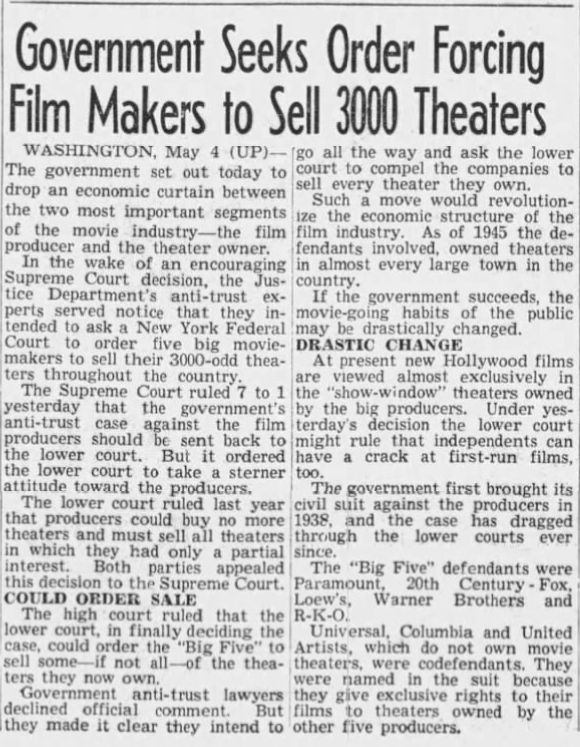
Studios lost a major case in 1948
In 1948, a Supreme Court decision forced the major Hollywood studios to sell their theater chains and stop unfair sales bundles. Splitting movie production from theater exhibition meant studios could no longer force their own theaters to show only their films, and they could no longer force theaters to buy large bundles of average films to get top-tier hits.
After that, studios made fewer films and started focusing more on expensive blockbusters. The studio system of long-term actor and crew contracts began to fall apart. Actors were released to become new stars in television, and film libraries began to be sold to television stations.
Television
In 1948, about 90 million people were regular moviegoers. By 1958, that had fallen to 46 million, while the audience for television had grown to 204 million. To try to compete with television, movies boasted Technicolor and a slew of widescreen formats. Large urban venues would have roadshow releases of longer prestige blockbusters with overtures instead of shorts and trailers, reserved seating, and souvenir programs.
Two TV stars took over a major Hollywood studio
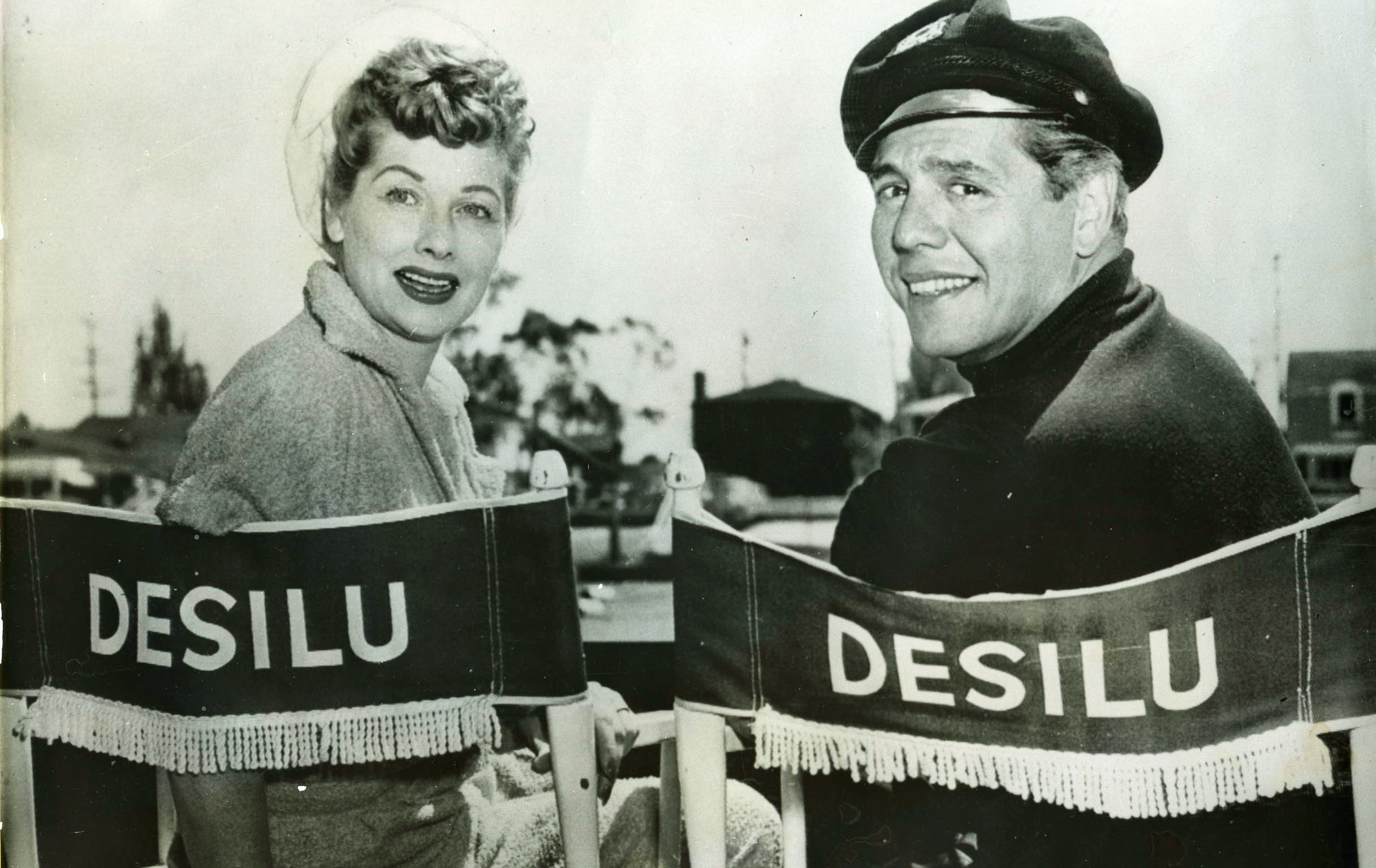
A case in point is how RKO Pictures became Desilu. RKO again went bankrupt under mismanagement by Howard Hughes, being sold to General Tire & Rubber, which sold the studio’s film library to television while shutting down active film production. Desi Arnaz and his wife, Lucille Ball, sold the rerun rights to the early episodes of I Love Lucy to CBS to help finance their acquisition of the RKO studios, which they renamed Desilu.
They went on to create a series of hour-longspecials as The Lucy-Desi Comedy Hour and rented their facilities for projects from other production companies that lacked facilities of their own. Lucy and Desi divorced in 1960, and two years later he asked her to buy out his share.
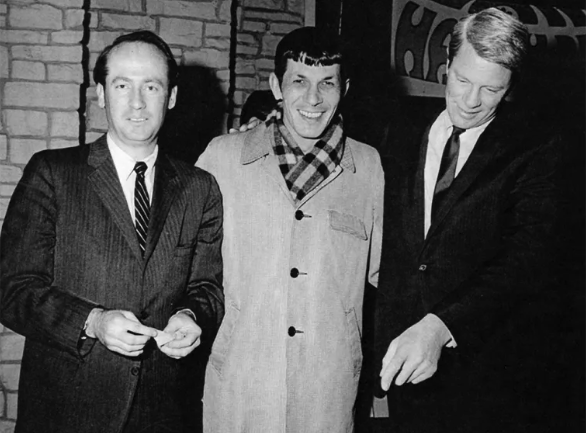
Herb Solow with Leonary Nimoy of Star Trek and Peter Graves of Mission: Impossible
Lucy paid $2.5 million for Desi’s portion, giving her 52% of the company’s stock and making her the first woman in Hollywood history to run a major television and film studio. When her second husband, Gary Morton, proved unable to properly manage Desilu, she hired Oscar Katz to develop, pitch, and sell new shows. Desilu had only one of its own productions still going in its studios, The Lucy Show on Stage 12.
Katz was inexperienced with west coast television production, so he hired Herb Solow, and they managed to start up two new television series in the ailing studio: Star Trek and Mission: Impossible. Katz was soon gone, leaving Herb Solow in charge, with Lucy famously telling him, “I’m just the girl from Stage 12.”
The new shows were expensive to produce, and Desilu lost money on each episode of Star Trek. The first season was budgeted at $193,500 per episode, but only four out of 29 episodes came in under that cap. However, Lucy kept signing the checks. Her ex-husband had pioneered owning series for later syndication of reruns, so she knew Desilu might eventually turn a profit if enough episodes were produced.
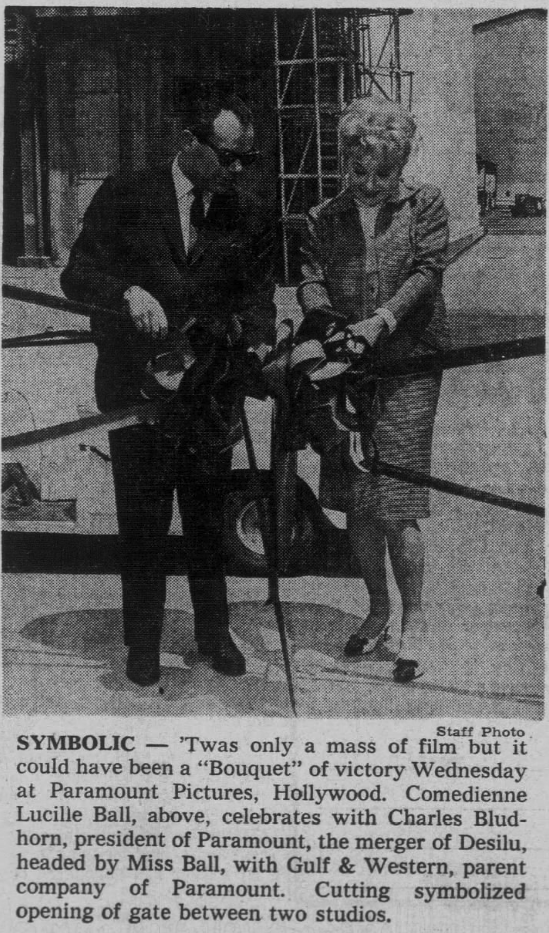
In October 1966, Charles Bludhorn, who ran the Gulf+Western conglomerate, absorbed Paramount, which shared a property line with Desilu’s Hollywood studio. Lucy knew that he was interested in acquiring Desilu for Paramount to gain a foothold in television productions. Her position was strengthened when Herb Solow managed to score hits with Mission: Impossible and the detective series Mannix, while Star Trek had adequate ratings given its demographics. However, the budget for Star Trek was cut about 4% for its second season.
Lucy sold Desilu to Gulf+Western for $17 million in July 1967, while episode 39 of Star Trek was being filmed. Bludhorn wasn’t happy with the per-episode cost of Star Trek or Mission: Impossible, so as with many a merger before and since, he cut costs.
Mission: Impossible had won Emmys and critical acclaim with more funding and a more stable timeslot from the CBS television network than NBC provided for Star Trek. Nevertheless, Paramount’s budget cuts gradually forced the series to rely more heavily on standing studio sets, reduce expensive location shoots, reuse stock footage, streamline the tape-briefing sequences, and batch-film scenes. That series hung on for a total of seven seasons.
When NBC finally renewed Star Trek for a third season, its budget was slashed another 5%. Given inflation and mandatory cast and crew salary increases, the additional cuts noticeably impacted the show’s production values. Penny-pinching included shooting no new footage of thebig U.S.S. Enterprise model, skimpier sets for alien worlds, fewer location shoots, less elaborate make-up, etc. A bad timeslot, a lousy third season producer, and cost-cutting made it inevitable that Star Trek would not continue after its third season, except that it had just barely enough episodes in the can for successful syndication.
Paramount would make plenty of money on a Mission: Impossible movie franchise from 1996 through 2025, but its real moneymaker turned out to be, of all things, Star Trek, with that franchise generating an estimated $10.6 billion in total lifetime revenue for Paramount Pictures.
New Hollywood Pivot to Summer Blockbusters
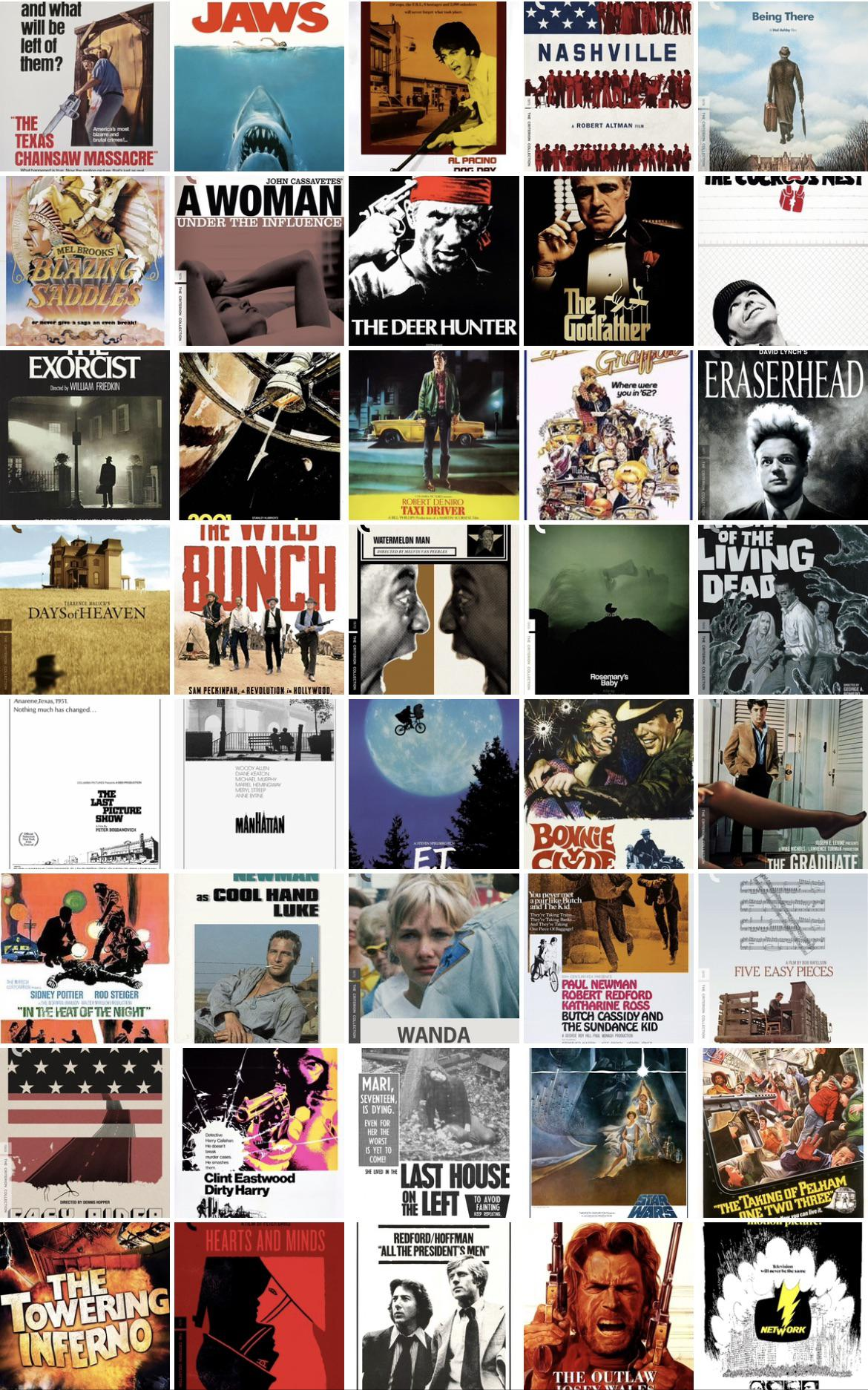
The mid-1960s to the early 1980s was a New Hollywood era when director-driven storytelling replaced traditional studio micromanagement. The collapse of the censorship-enforcing Hays Code brought grittier realism, the counterculture, and anti-heroes. However, big financial flops like 1980’s Heaven’s Gate brought that era of absolute director control to an end.
The massive commercial hits of Jaws in 1975 and Star Wars in 1977 shifted the various movie studios to focus on high-budget high-concept commercial formulas. The 1980s brought many action movies with practical special effects and bankable movie stars. The introduction of computer-generated imagery brought big hits in the 1990s with Jurassic Park, Titanic, and The Matrix.
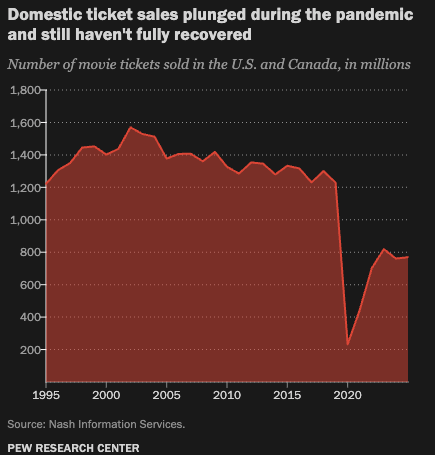
The introduction of videocassette players and later optical discs created a boom in secondary viewership, bolstering studio revenues while ticket sales stabilized at about 1.2 to 1.5 billion each year in the late 1990s and early 2000s. Global theatrical markets expanded even as domestic per-capita attendance flattened, making international box office revenues increasingly important for Hollywood profitability.
Franchise Dependency
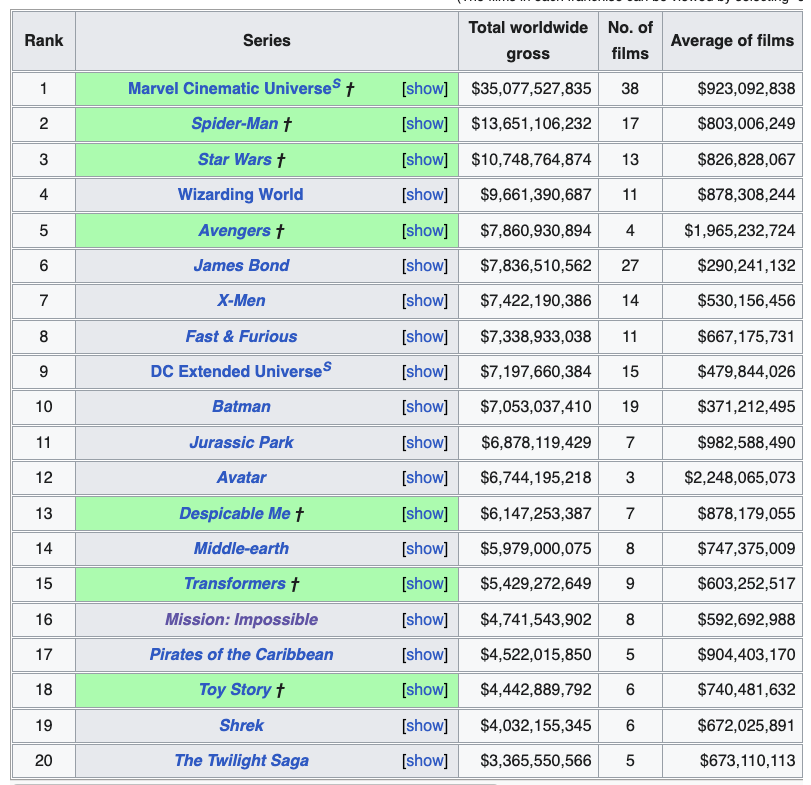
In the first decades of the 21st century, Hollywood came to depend on major intellectual property franchises, with a slew of sequels and adaptations. The Marvel Cinematic Universe started with Iron Man in 2008, and it peaked in the late 2010s with Avengers: Infinity War and Avengers: Endgame culminating a 22-movie Infinity Saga. Marvel Comics also birthed 17 Spider-Man films and 14 X-Men features. The DC Extended Universe and Christopher Nolan’s Dark Knight Trilogy dominated the 2000s with Batman films and the launching of a shared universe in 2013.
Outside of comic book adaptations were fantasy and science fiction adaptations of Harry Potter and Tolkien books as well as The Hunger Games and Twilight Saga. George Lucas had a Star Wars prequel trilogy from 1999 to 2005 and Disney produced a sequel trilogy from 2015 to 2019 and three standalone films.
Other franchises included Fast & Furious street racing films that became an action heist franchise, Transformers, Pixar animated movies, and Shrek & Despicable Me animated films.
Movie franchises box office as of October 2026; ones with active films that month shaded green
While some franchise properties could draw massive theatrical crowds during peak weeks, mid-budget adult dramas and comedies began migrating to streaming platforms. Total North American ticket sales dropped by over a third after the COVID-19 pandemic. The habit of watching a movie in a cinema was broken for many people, and franchise fatigue had set in.
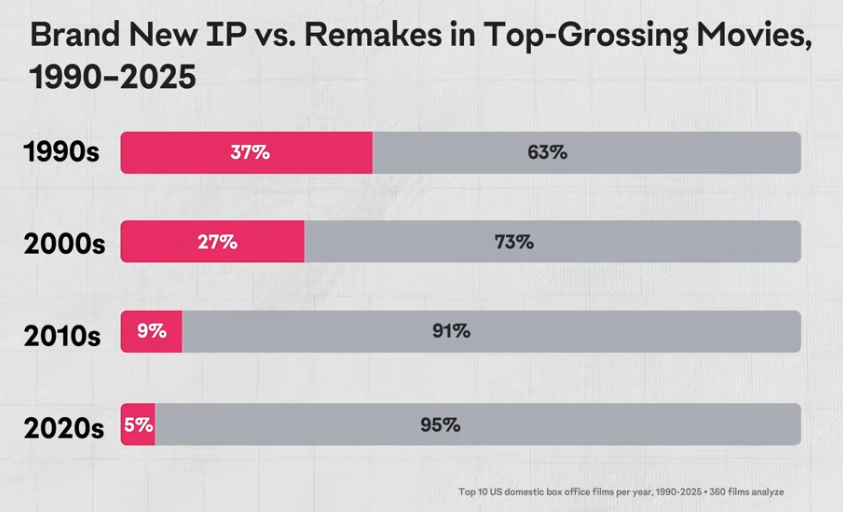
By 2025, over 50% of all major studio wide-release outputs were from franchises, with the 2026 theatrical slate saturated with Marvel, Star Wars, DC Comics, Toy Story, and Super Mario Bros. movies. As traditional comic book superheroes lost their appeal, studios shifted to video game properties. They now largely bypass riskier, original standalone films due to the profit-to-cost ratios.
Slidebean’s analysis showed how remakes of existing intellectual properties grew to become 19 out of every 20 top-grossing movies in the 2020s.
19 out of every 20 top-grossing movies in the 2020s were based on existing intellectual properties [Source]
A Fraught Future
Studios that once prioritized theatrical runs and DVD sales now measure success in hours viewed and subscriber retention, blurring the line between film and television while ad-supported streaming is surging as viewers experience subscription fatigue. I expect the industry to undergo savage decline in the next decade as franchises falter and streaming further atomizes audiences with increasing AI-assisted personalization. Movies and television are evolving rapidly, and there will be plenty of extinctions along the way.
Once upon a time, short stories were quite popular. They were a dominant form of mainstream entertainment from the 1920s through the 1940s before television and mass market paperbacks became widespread.
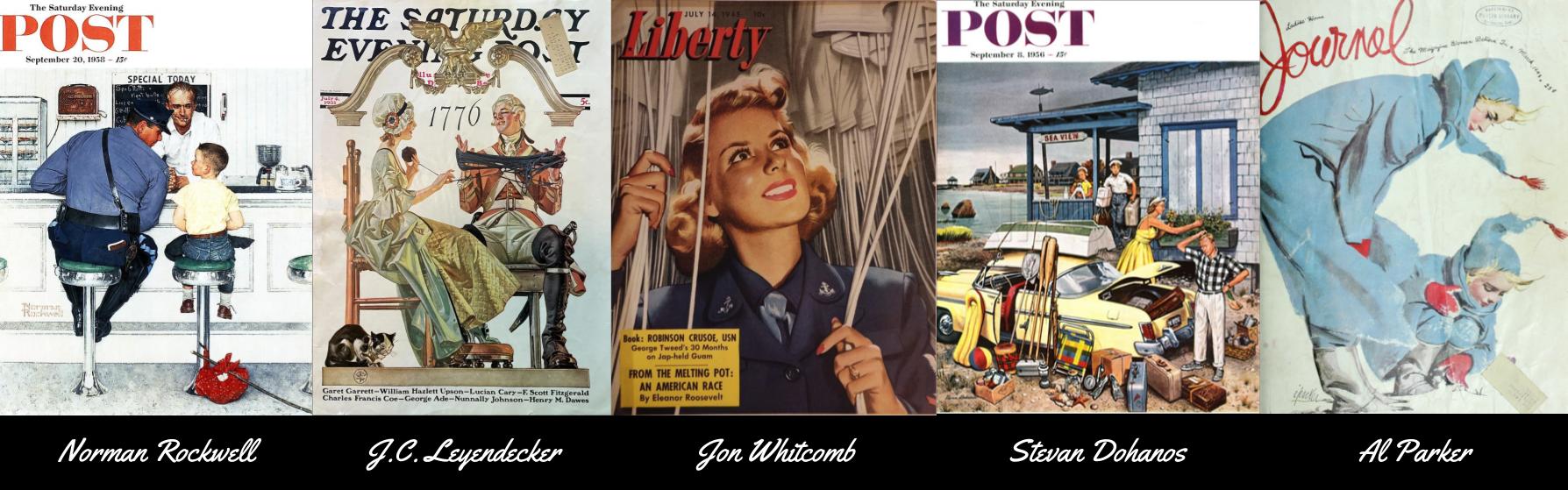
Countless genre magazines offered horror, mystery, romance, science fiction, and westerns. Those were often “pulps” printed on cheap paper, while various “slicks” with expensive glossy paper offered more literary fare. Illustrations were vital for rack sales, while interior illustrations could convince someone thumbing through a magazine to stop and read a story they might otherwise pass by.
The 1950s through the 1980s were a transitional period. Almost all of the pulps were gone by the end of the 1950s, and short stories migrated into slick high-culture monthlies and low-print-run academic magazines. A few genre publications survived, such as Alfred Hitchcock’s Mystery Magazine, which I subscribed to when I was in junior high and high school.
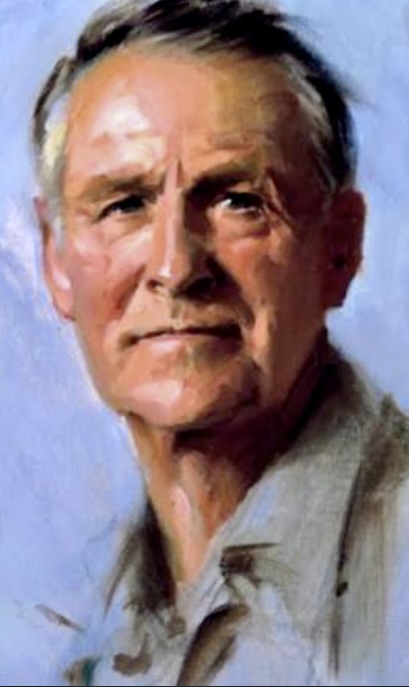
Tom Lovell portrait by Everett Raymond Kinstler, 1980
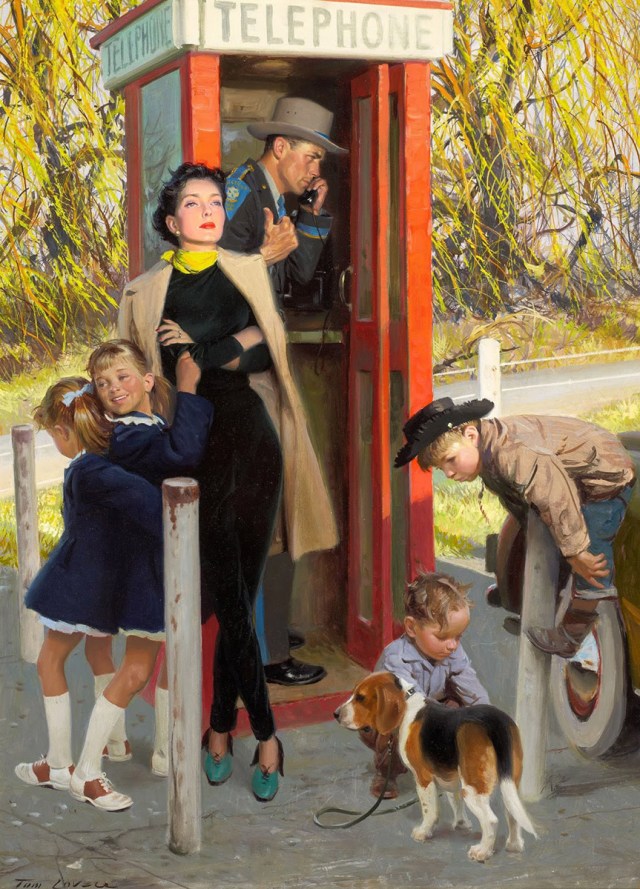
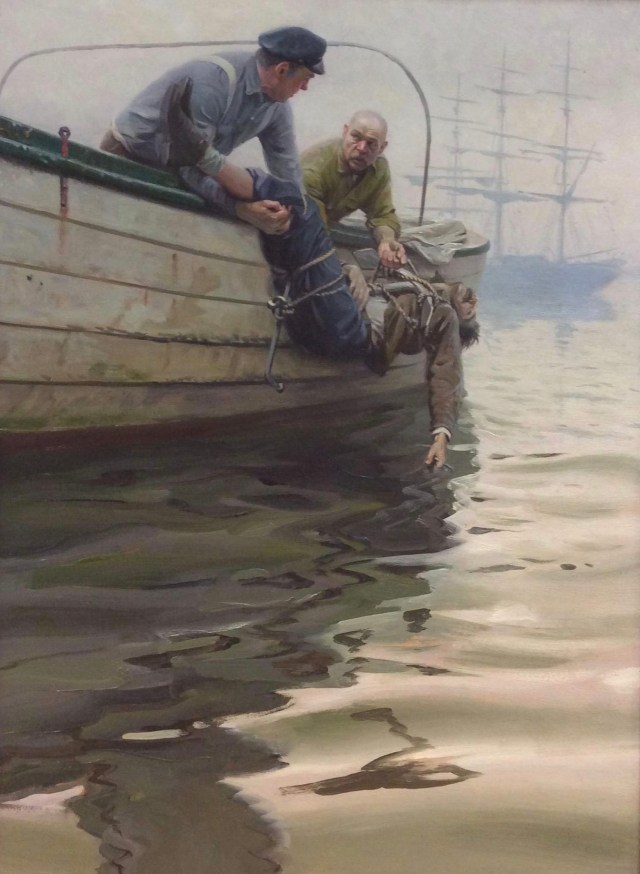
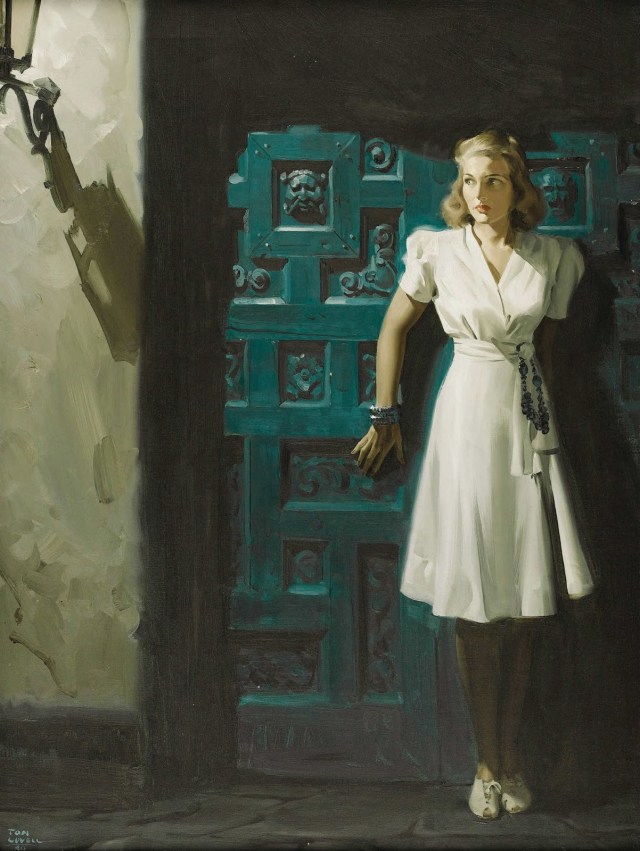
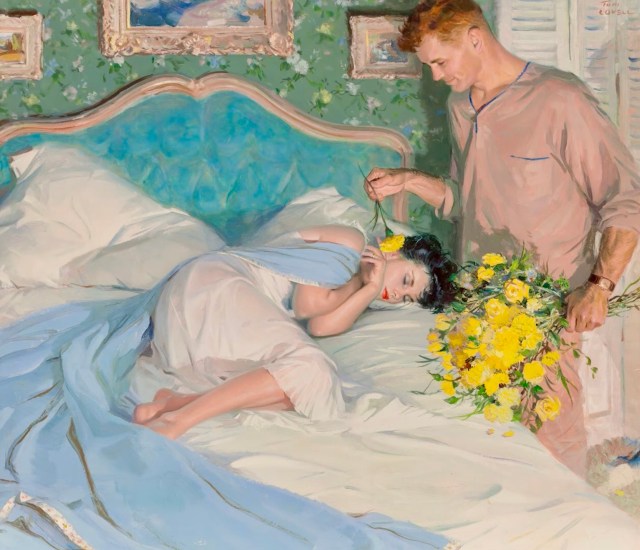
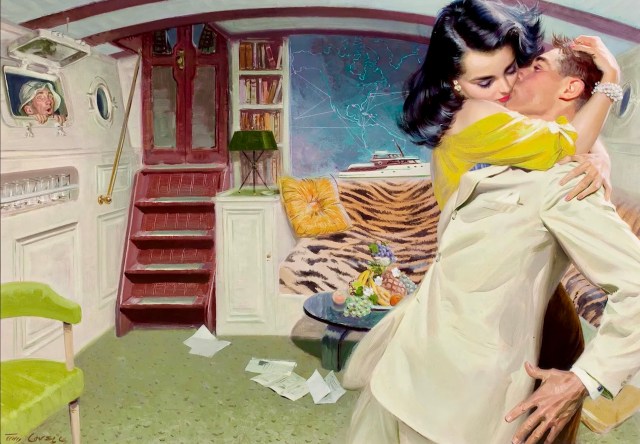
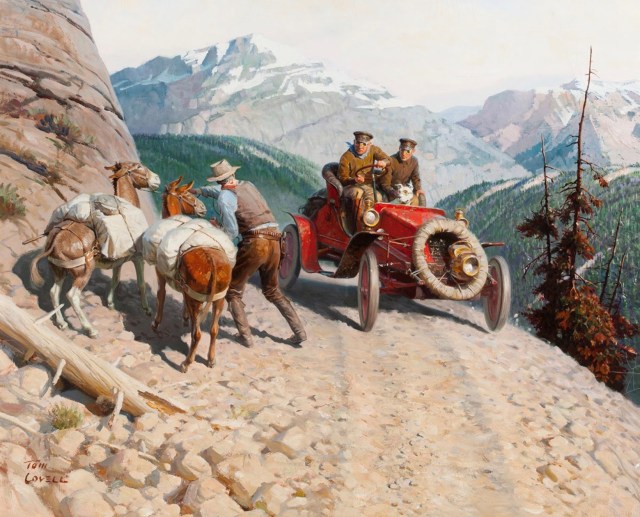
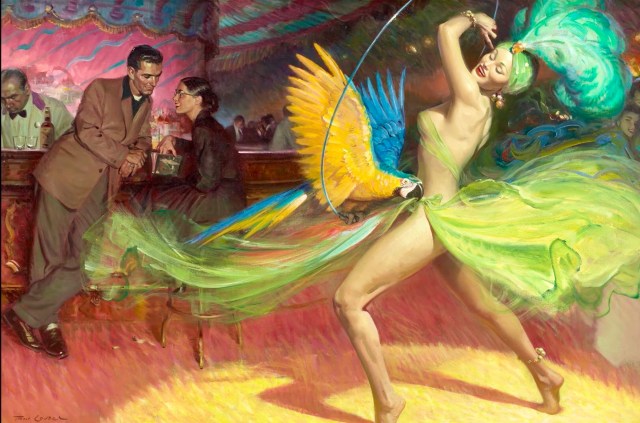
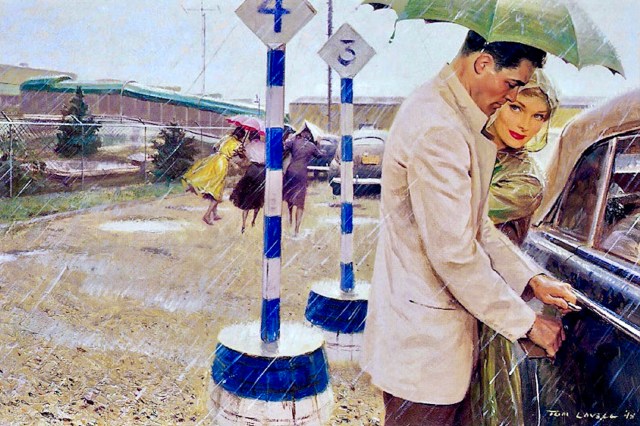
A gifted illustrator whose art was particularly compelling was Tom Lovell. He started in the pulp genre magazines but then graduated to the slicks, while during World War II he was a sergeant in the Marines doing illustrations for Leatherneck.
After the market for illustrating magazine short stories dried up, he did work for National Geographic and some commissioned artwork for the Latter Day Saints before focusing on western art. You can readily borrow on the Internet Archive the book The Art of Tom Lovell: An Invitation to History, which focuses on his later historical art for National Geographic and the western art he concentrated on after 1969.
His Late Western Art
Lovell twice won the Ann Noble Brown Purchase Award, the highest honor of the National Academy of Western Artists Prix de West invitational art sale and exhibition sponsored by the the National Cowboy & Western Heritage Museum in Oklahoma City. Wendy and I have toured several of the annual shows in my hometown.
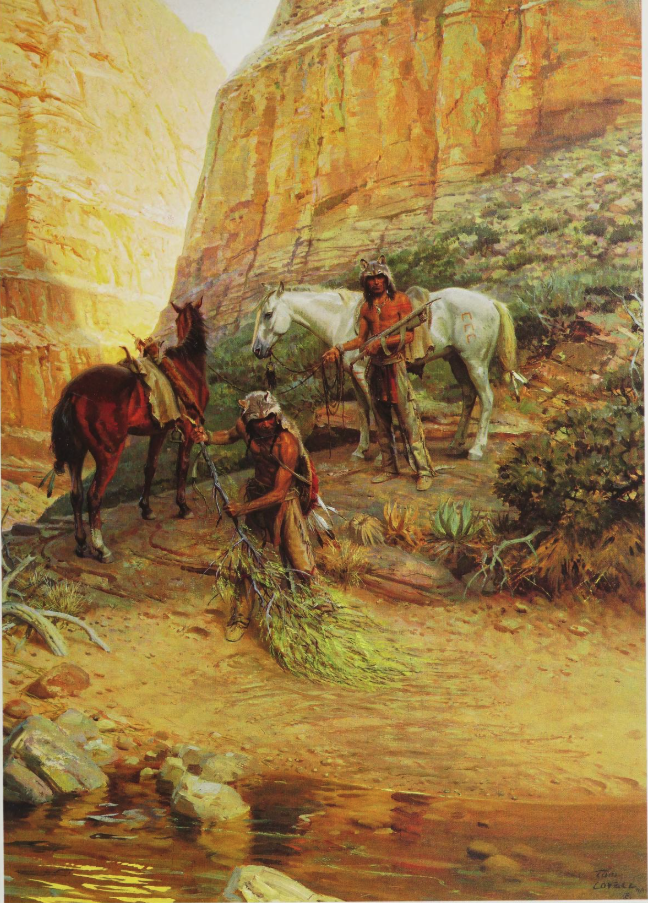
The Wolf Men won the Prix de West Ann Noble Brown Purchase Award in 1974
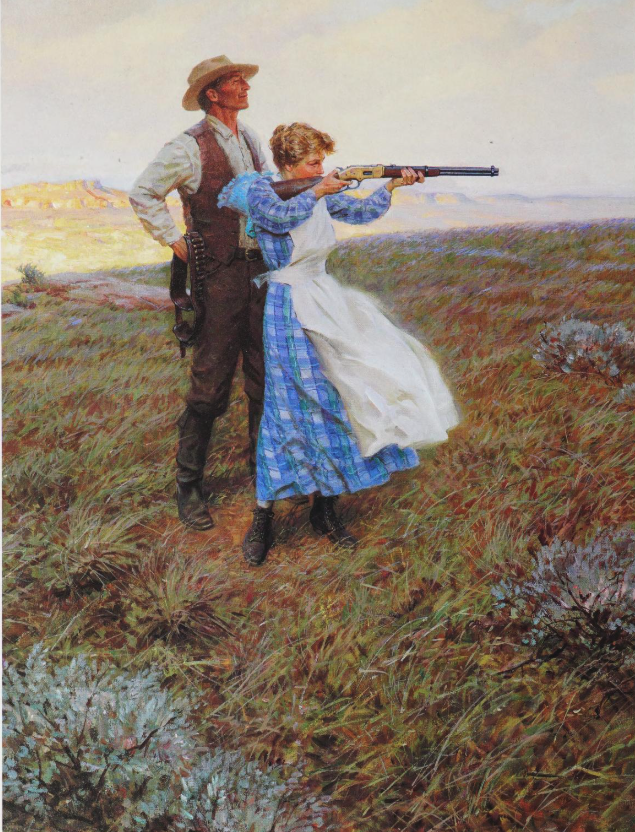
The Wolf Men won in 1974, depicting Comanche warriors wearing wolfskin headdresses. Don Hedgpeth shared that such dog soldier societies “guarded the camps during periods of intertribal raiding, preserved discipline during tribal hunts, provided leadership in war, conducted dances and ceremonies for the tribal gatherings, and passed on tribal history and folklore”. In the painting, two dog solders “are covering the tracks of a war party which has crossed the river into enemy territory”. A dozen years later, Lovell won again with Target Practice.
Target Practice won the Prix de West Ann Noble Brown Purchase Award in 1986
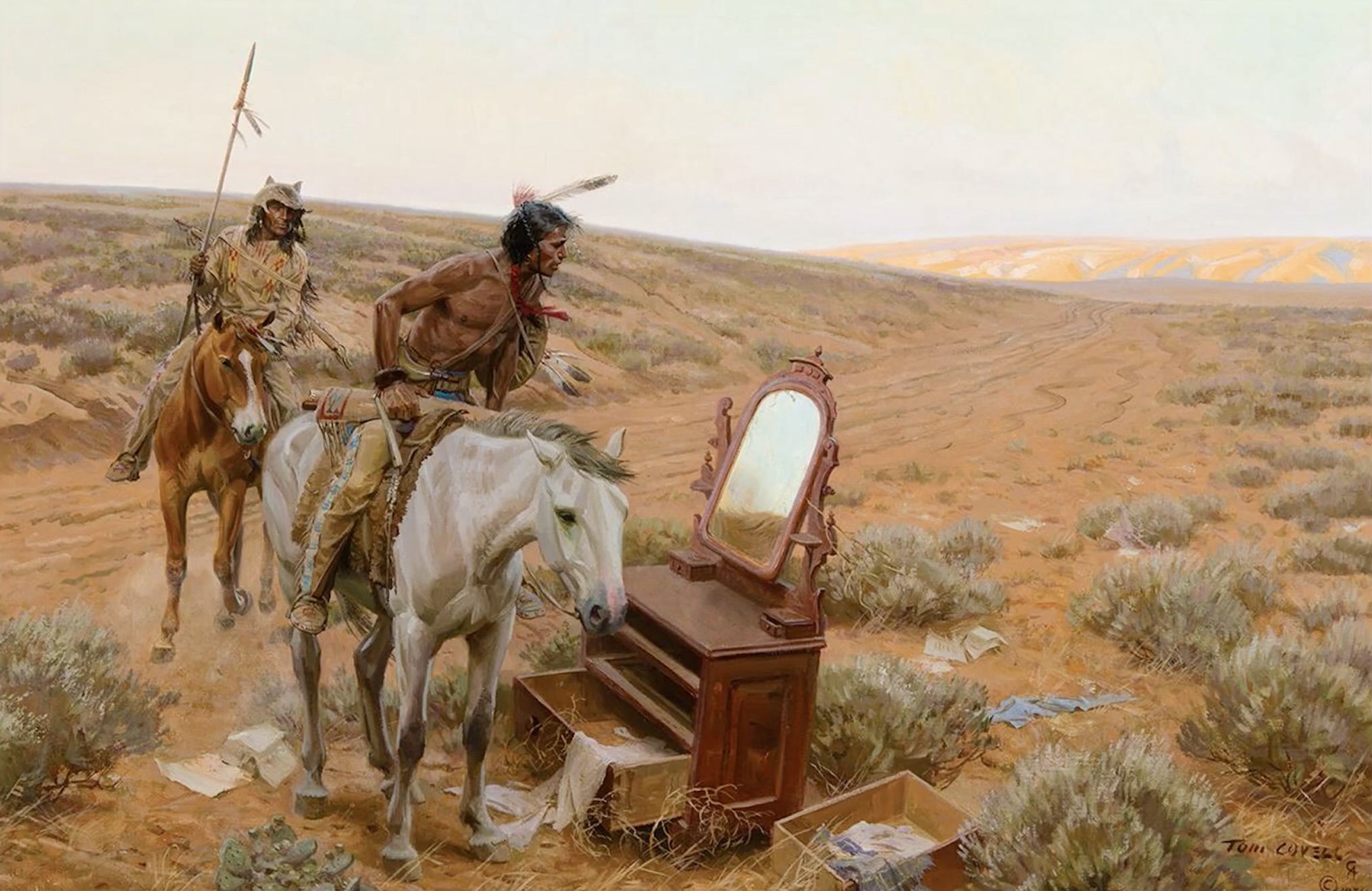
Those paintings show the disparate First People and colonizer cultures of the west, while The Heirloom depicts their intersecting differences, not through conflict but in lifestyle. “…more than ten thousand wagons rolled across the western Plains along the Oregon Trail during the decade of the 1840s. … Hardship and hunger rode alongside the overland immigrants. … Hope was abandoned along the trail, and with the weakening of the team of horses, so were cherished items which had been intended for new homes and new lives in the promised land.”
The Heirloom of 1976
Lovell painted it in the year of the bicentennial, and it sold in 2018 for $134,550. Lovell wrote of it, “Two Sioux Indians ride by and pause to sadly note the beginning of white man’s pollution of their world, which continues to this day.”
That reveals his sympathies, and he noted the topic of his valedictorian speech to his New Jersey high school class was, “The Ill-treatment of the American Indian by the U.S. Government”. He commented, “In retrospect, I wonder how the three hundred hapless parents felt, being scolded by a sixteen-year-old on an otherwise cheerful occasion.”
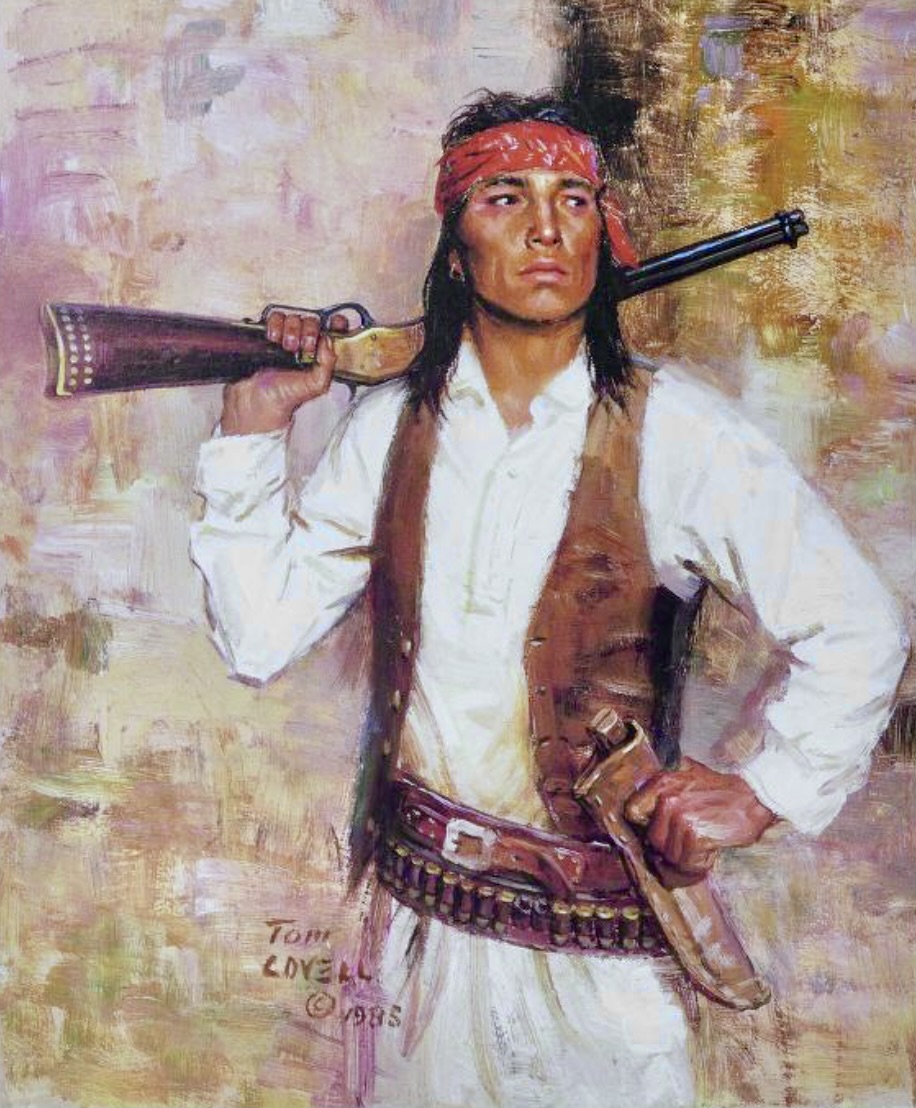
Chiricahua Scout of 1990
So this guy was both bright and talented, which helps explain why National Geographic would entrust him to do the painstaking research to bring authenticity to his historical paintings. I can admire his paintings that lack a clear narrative, such as Chiricahua Scout. But a bit of research lets us know that the red headband signifies he was an Apache scout for the Army and issued the Springfield 45-70 rifle to help in the tracking and capture of Geronimo, who spent his final 15 years at Fort Sill in Indian Territory and the new state of Oklahoma.
Lovell noted, “The U. S. Cavalry, sometimes numbering 5,000 troops, tried unsuccessfully to capture Geronimo. Finally with the aid of Chiricahua scouts this was accomplished. As a disgraceful climax, these very scouts were rounded up with other Apache hostiles and sent to Florida as prisoners of war. They were separated from their families, contrary to promises made by Gen. Miles.”
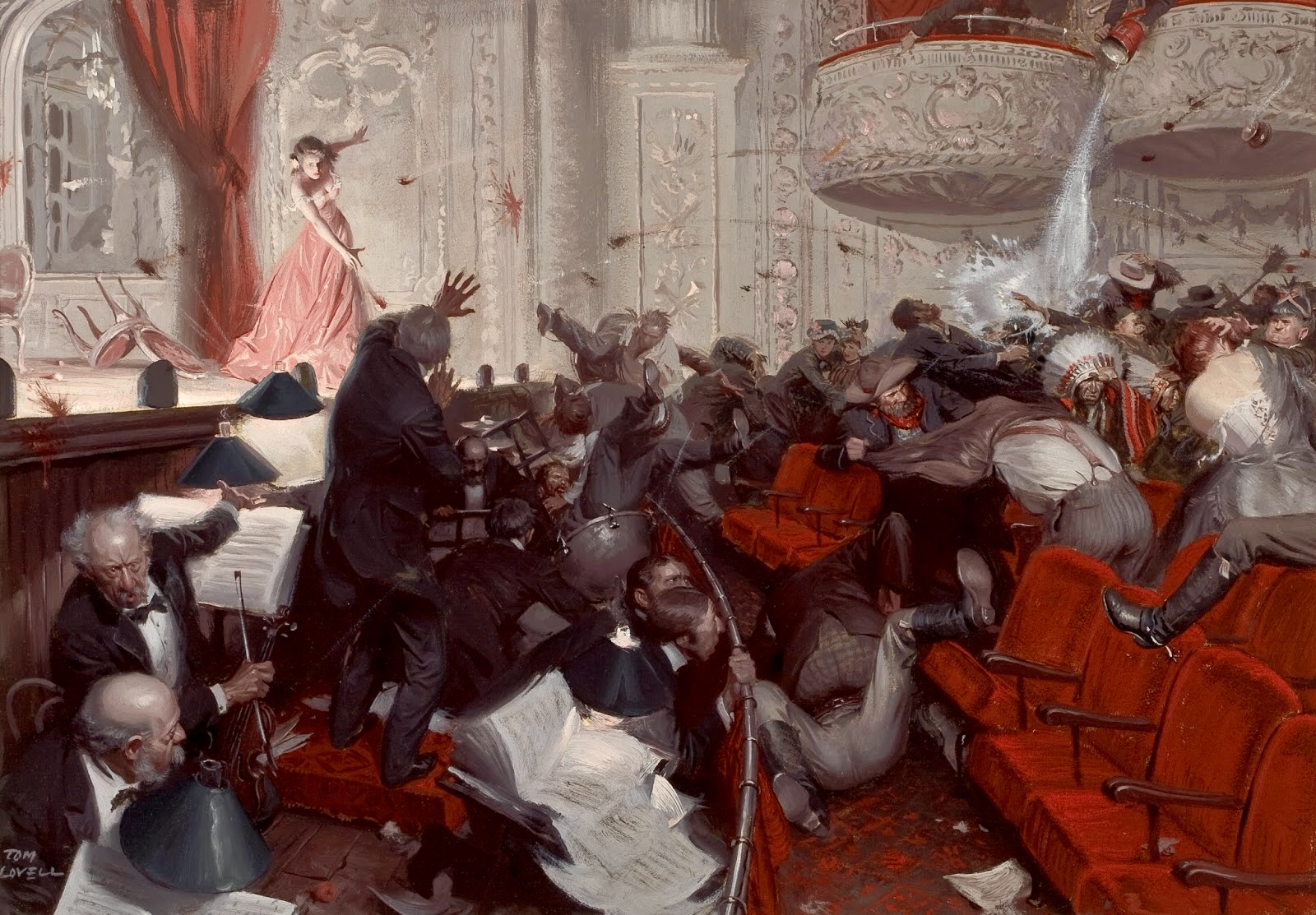
Lovell could also depict livelier aspects of the west, such as Culture at Silver City. There is humor in the formal setting and the uncouth audience. Lovell said he created it with no models or scrap of any kind, except for his wife posing for the diva on the stage.
Culture at Silver City
You’ll notice how the painting is almost entirely red and black, which reflects the two-color printing process that was often used for interior illustrations in the middle of the 20th century. So I would speculate the work was created for one of the slicks.
His Short Story Illustrations
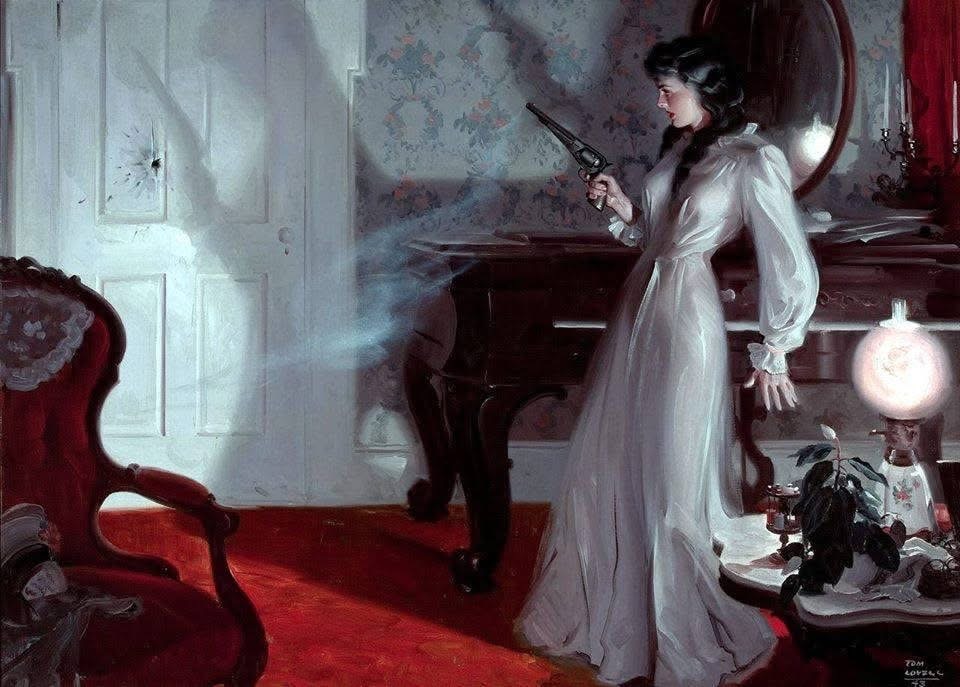
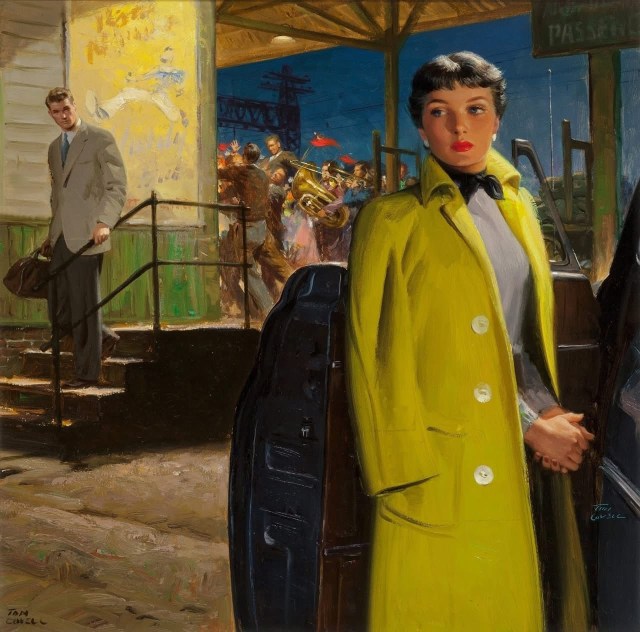
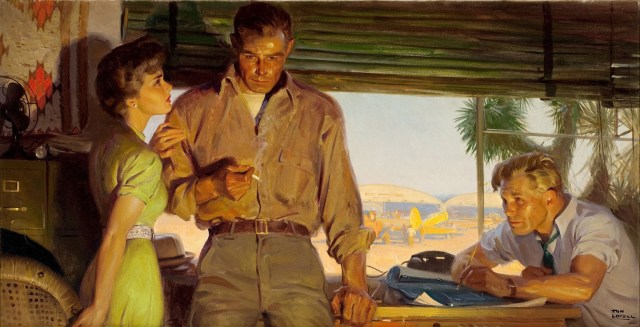
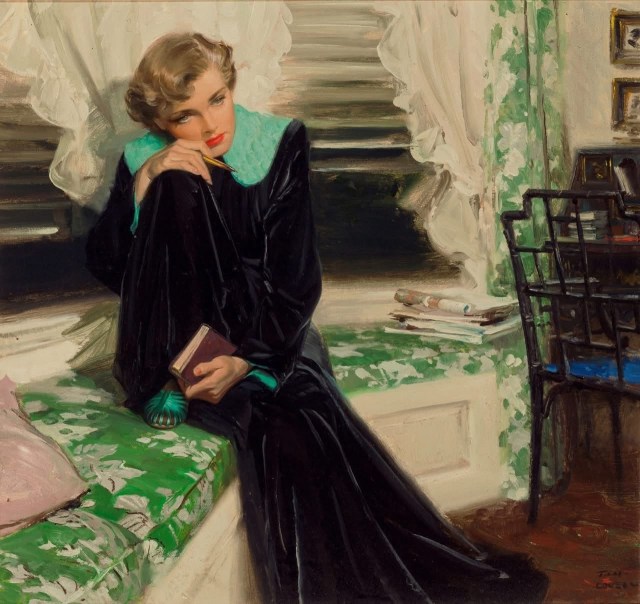
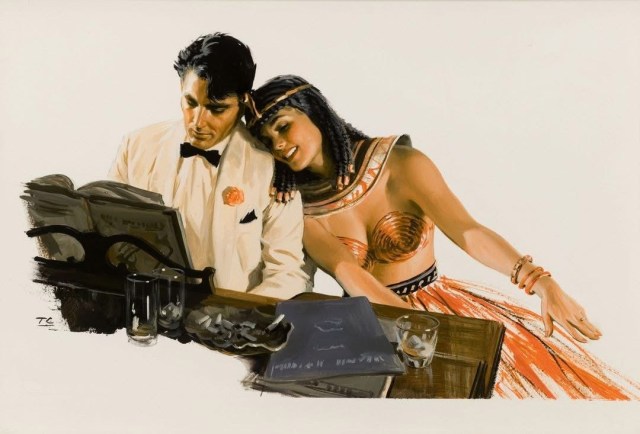
Lovell’s later work is impressive, but more engaging for me are his works crafted to illustrate various short stories. The images lead the viewer to speculate about the unseen story. An example, which also features mostly red and black, is his Shot in the Dark from 1943.
Shot in the Dark from 1943
We see an elegantly dressed woman holding a big revolver that has just been fired, leaving a large hole in a doorway. It is obviously night, and she is in a parlor or music room, given the rectangular pianoforte in the background. Did she fire at some intruder who was on the other side of the door? The double shadow adds intrigue.
The time period is uncertain, as the revolver is reportedly an 1863 Remington New Model Army, and the furnishings seem Victorian. The coloration leads one to think this was created as an interior illustration for some short story, but I found no confirmation of its origin.
Unidentified
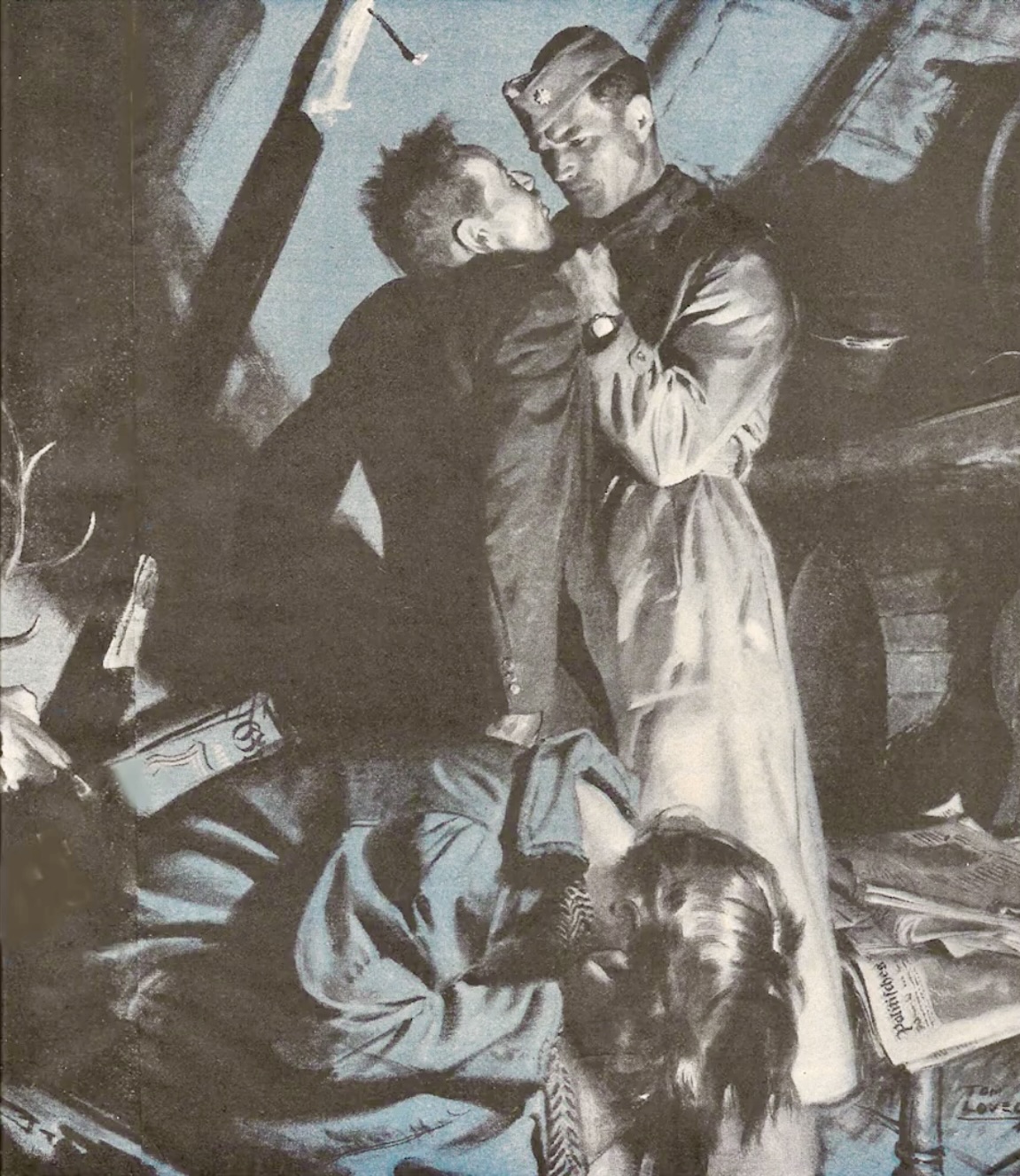
A work limiting itself to black and blue shows a confrontation between a military man and some civilian, with a woman slumped over, holding her head in her hands. German books and newspapers are seen. So does this involve espionage or an underground resistance?
Google Gemini claimed that the piece was captioned, “His hand went up and fastened into the collar of the civilian’s coat. ‘Now, then,’ he said roughly. ‘Let’s have it.'”
It then went on to claim that it accompanied “The Dynamic Man” by C.E. Scoggins in the August 29, 1942 issue of The Saturday Evening Post. However, that might well be just another stupid A.I. hallucination.
Unidentified
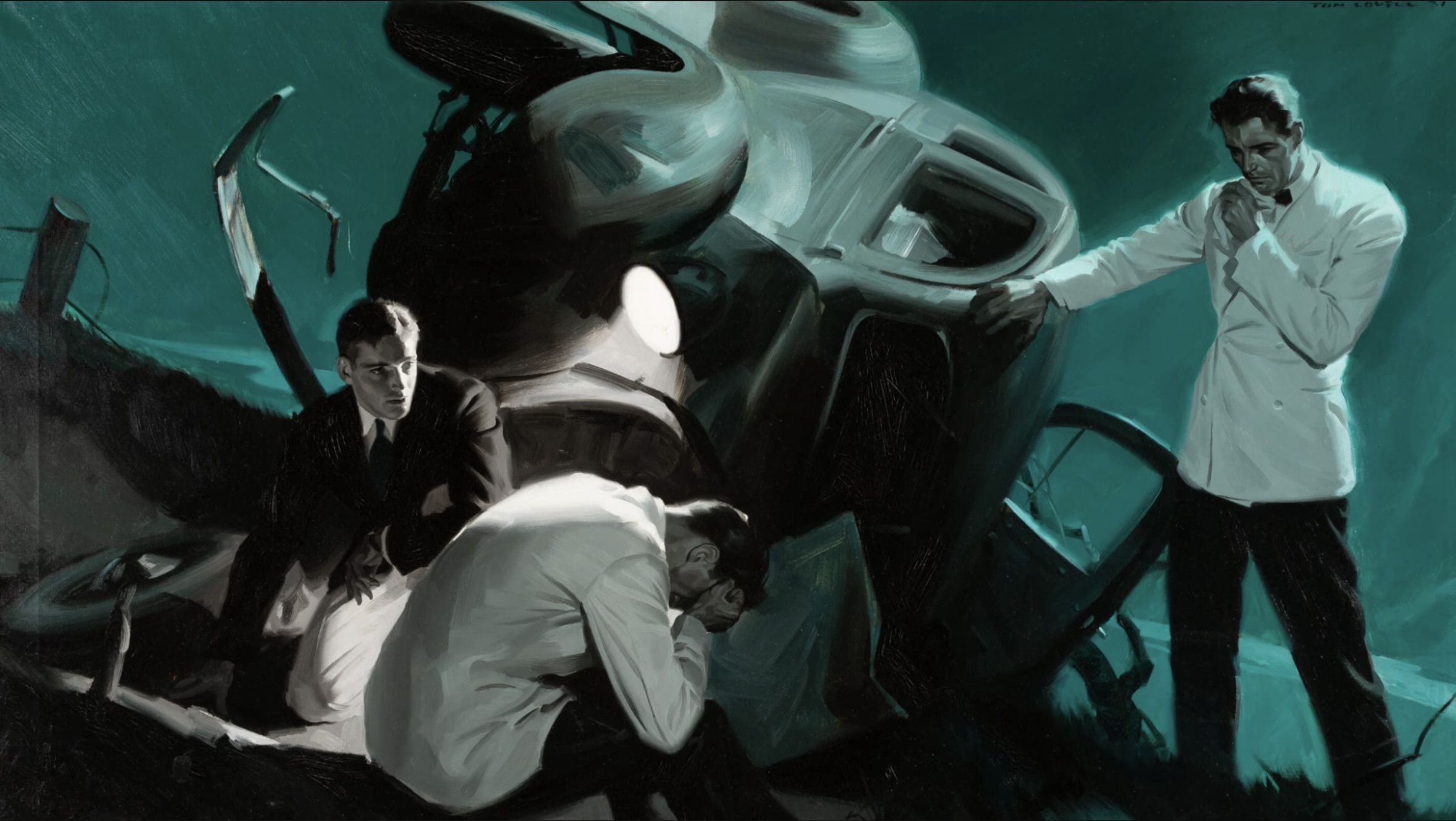
Another scene in black and green shows the aftermath of a car accident, with a wonderful contrast of the men illuminated by car’s headlight versus the moonlit man at right. Were these men in the car, and is there anyone left inside? Is the man holding his head upset about someone’s injury, or just the car wreck? Perhaps he has a concussion? We don’t know, but the crouching man at the left appears in better shape than the others.
The illustration is from another era, not only in the design of the sedan but in the recognizable but now quite uncommon formal wear. One man is wearing a dark suit coat with tie and white pants, while the others are in white dinner jackets and dark pants we would associate with daytime events and warmer climates. The contrasting clothing makes for a more interesting illustration, but is there a story reason as well?
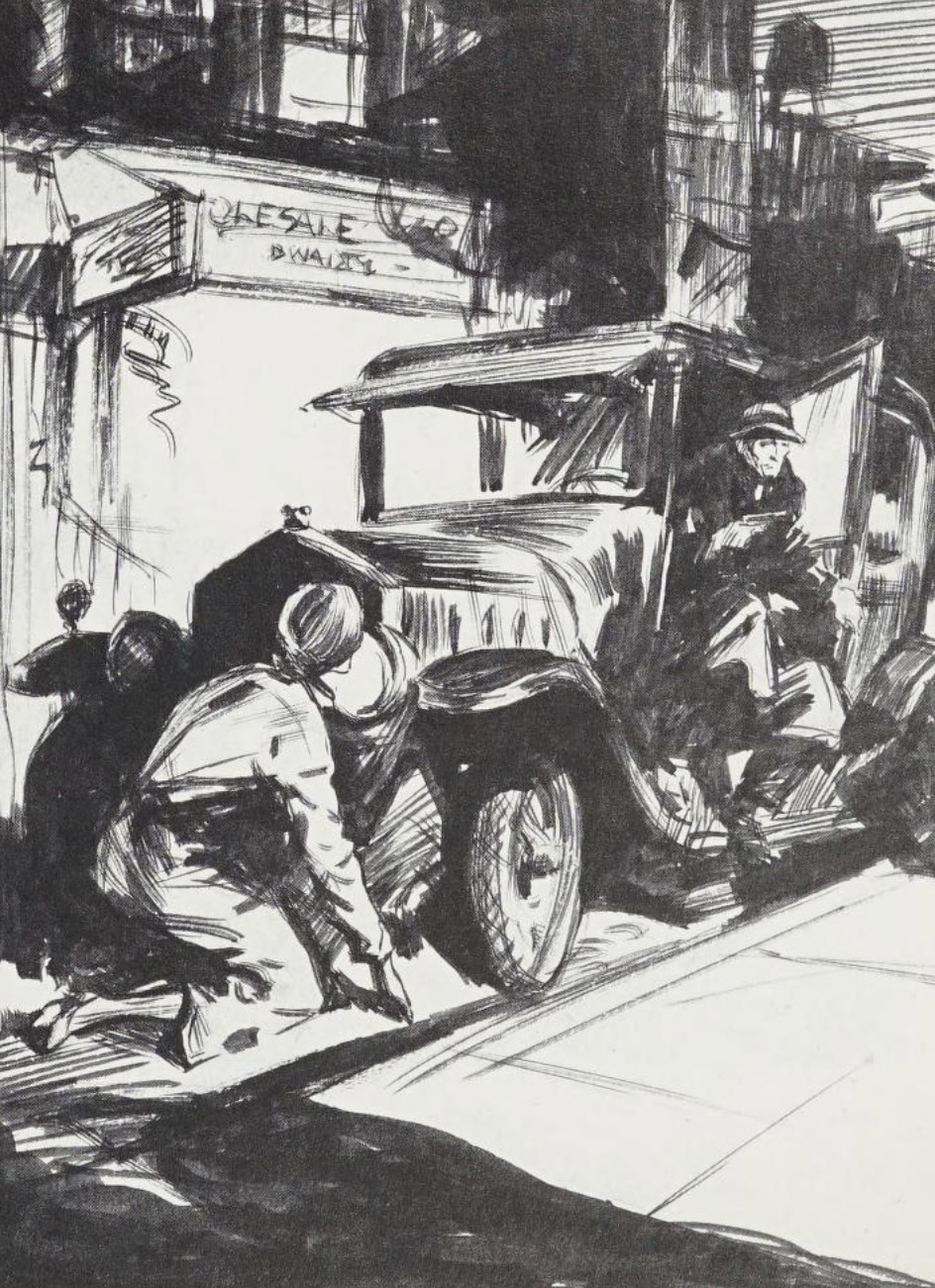
An early Lovell dry brush illustration
Next let’s step back to the early days of Lovell’s career. It is the late 1920s, and after jobs as a ship deckhand and a construction company timekeeper, he was working on a Bachelor of Fine Arts degree from Syracuse University when he went looking for illustration work in New York City. A pulp editor asked if he could handle “dry brush” and Tom, like many a newcomer, said he could and then rushed home to learn how.
The technique was to dip a brush into a bottle of India ink, brush out most of the ink on a scratch pad to spread the hairs on the brush, and then apply it to create a stroke of many fine parallel lines. That created a gray tone while still just using a single color of ink, and was important to the inexpensive pulps which could use them for cheap line engravings instead of more expensive halftone printing. Lovell could earn six dollars for an illustration and sixty dollars for a magazine cover.
Lovell went on to earn his degree, married a fellow student, and was getting work illustrating The Shadow and Wild West Weekly and various other pulps. After gaining enough experience, he stopped working for the pulps and spent six months preparing new samples to break into the glossy magazines like Good Housekeeping, The American Magazine, The Ladies Home Journal, and Cosmopolitan.
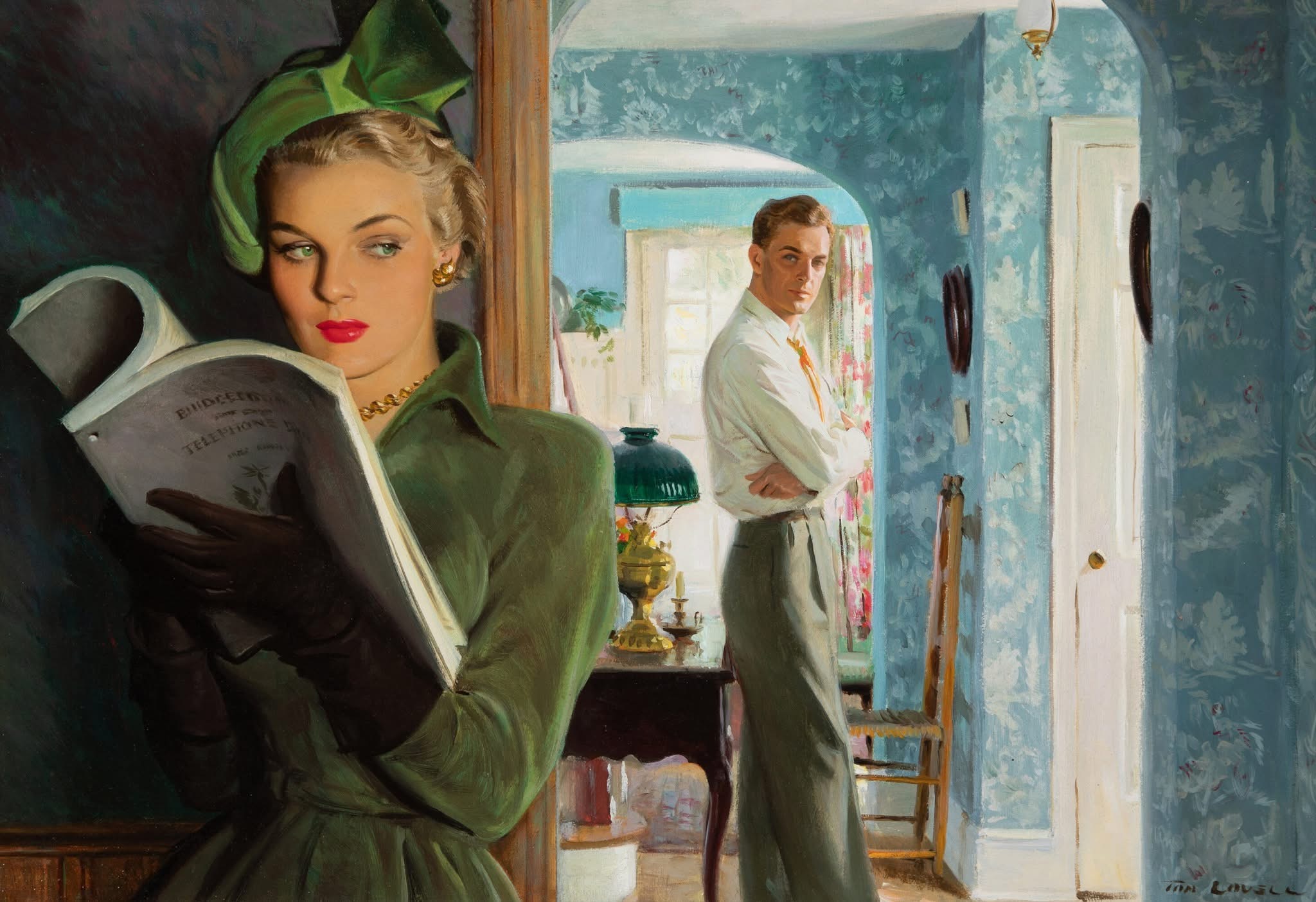
Let’s consider an illustration for the story “Blackmail” by Allan Vaughan Elston in The American Magazine‘s December 1949 issue. We see a blond woman in a nice green dress and hat with black gloves standing in the shadows of a home, holding a telephone directory. She is glancing sideways at a man standing in a bright daylit room beyond. What is going on?
From “Blackmail” in The American Magazine, December 1949
My theory is that she has asked to use his telephone, but is up to something nefarious, and he is suspicious. The internet summarized the story thusly: “An attractive blond goes to the home of Congressional candidate James Norman under false pretenses to plant a fake trail they are having an affair and blackmail him.”
Okay, that fits. However, a pet peeve of mine is when illustrations don’t match the story content, and I wondered if Lovell’s supposedly scrupulous accuracy in later works would be reflected in his earlier short story illustrations. I was able to track down a reprint of the story on pages 26-37 of the March 1953 issue of Ellergy Queen’s Mystery Magazine. The story begins: “The woman was blonde and attractively thiryish. Her suit, handbag, and hat matched, rather startlingly, in a pale shade of green.” Check.
She rings Norman’s front door and asks to look up an address in his phone book, claiming to be late for a dinner party in the neighborhood she had thought was in that block. He invites her in, directing her to an alcove. There she picks up the phone book, thumbs through it, and emerges a bit later. So far, so good.
However, in the story the scene occurs after 7 p.m. when “twilight hadn’t yet faded” which doesn’t at all match the daylight streaming into the front room in the illustration. Worse, the woman in the story stares ruefully at smudges on her finger tips that look like garden mud, using that as an excuse to access a bathroom and plant her make-up compact in it. Yet in the illustration, she is wearing black gloves, which would ruin her plan.
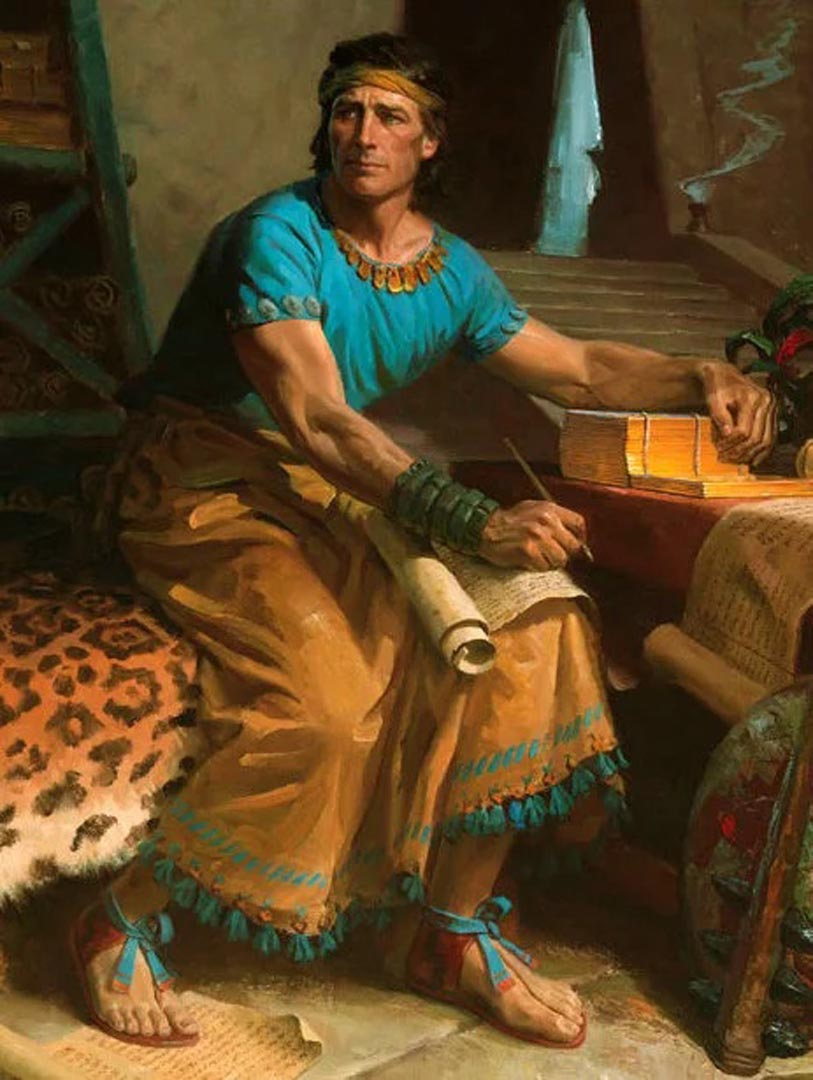
Mormon Abridges the Plates circa 1970
So while I admire Lovell’s artwork, and it did get me to read the entire short story, it failed to properly illustrate that story. Hopefully he did better in his later work for National Geographic and in the illustrations he created for the Book of Mormon in the 1960s and early 1970s when he was desperate for commissions. Reportedly his paintings continue to appear alongside others by Harry Anderson, Arnold Friberg, and Ken Riley in the church’s magazines, digital media, and curricular materials.
Common Ground
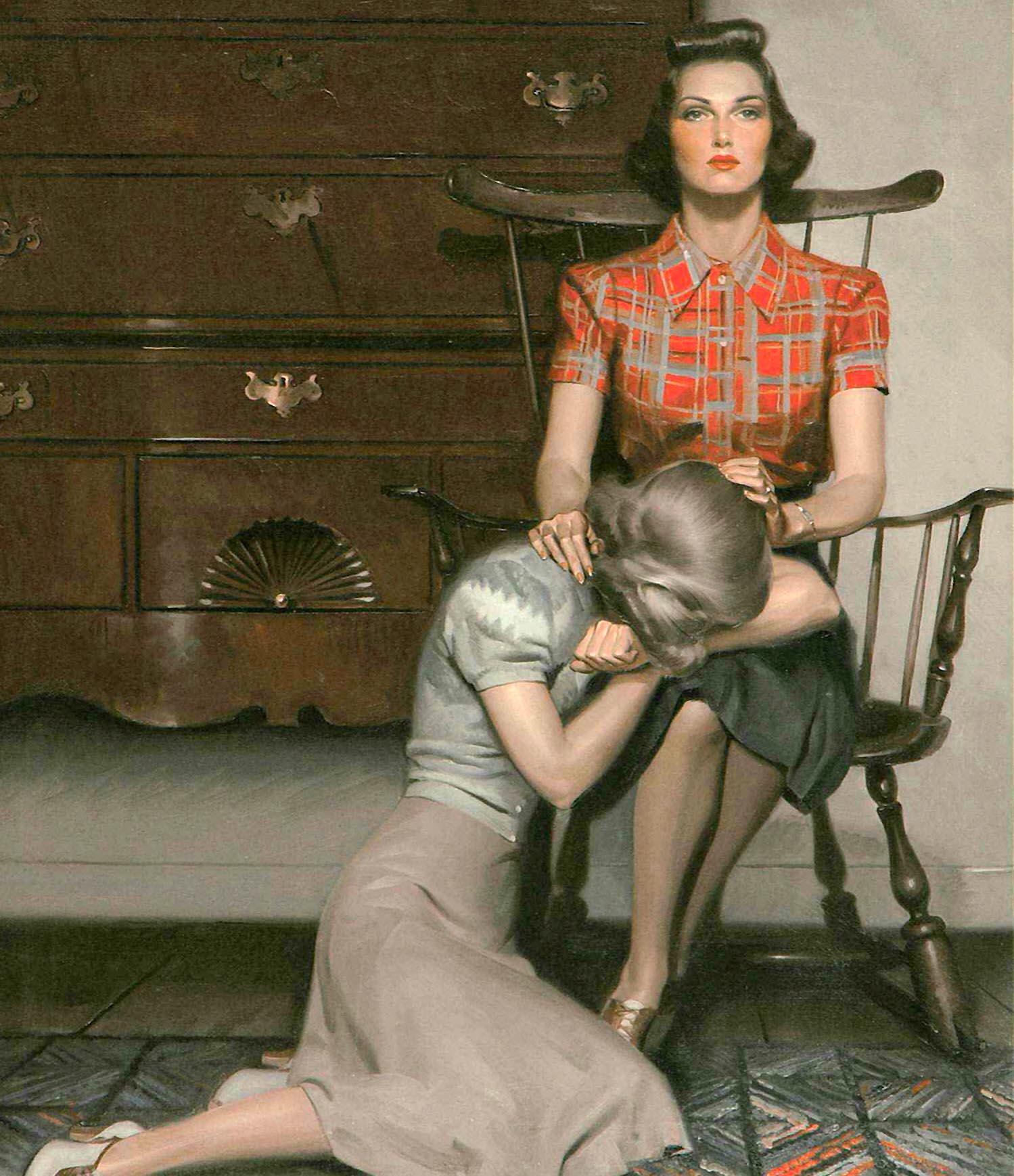
I had fun tracking down the story for his 1949 “Blackmail” work, but I had no such luck for a more intriguing painting from 1940, created for Sarah-Elizabeth Rodger’s short story “Common Ground” in the June 1940 issue of Ladies Home Journal.
The painting shows two women. One is sitting upright and stoic, with a tear glistening in her eye, comforting a woman slumped across her lap. The seated woman is wearing a wedding ring, but Lovell has carefully positioned the other to show she wears no ring. So what is going on?
From “Common Ground” in the June 1940 issue of Ladies Home Journal
The title of the short story has led people to speculate that the seated woman is the wife, and the slumped one is the mistress, of a man who had been reported killed in World War II. However, the timing of the short story is rather early for that if the ladies were Americans. Some have speculated that it might show a mother comforting a daughter, but to me the women aren’t far enough apart in age for that. The platinum blonde being comforted is interesting since genuine platinum blondes are quite rare, and her subdued and stylish clothing and heels are more posh than the cheaper and bolder textiles of the seated woman’s outfit.
I couldn’t locate the text of the story, but a Facebook post reported that the story is about two friends, poor Anne and wealthy Helena. Helena is a wealthy hardware heiress who married Karl, a baron in Europe. She divorces him and returns to America, sheltering at a small cottage in Connecticut to visit Anne and her husband and baby. The husband’s job pays $30 per week, while Helena receives $300,000 per year from a trust. Helena gives the husband a lead on a new better-paying job, which he accepts. Anne is in a panic that her husband is about to run off with Helena.
Then Helena receives a cable that her ex-husband has died in an air race in Austria. She weeps on the lap of Anne: “When the cable came about Karl, Anne’s tears fell with her own. ‘Helena, it’s much better than many endings,’ Anne said.”
I can’t check on the accuracy of the illustration, but I do think Lovell did a marvelous job conveying the sadness and fear that grip Anne, and the dark wood of the dresser provides a lovely contrast for the silver and gray for Helena. The spoiler ending is that a friendly neighbor of Anne and David declares his love for Helena, they quickly marry, and they leave for Europe. Anne, David, and baby are left behind together in Connecticut, looking forward to an easier life with David’s new job. My guess is that the European conflict might not enter into the story at all, what with Helena happily moving back and forth between Europe and America.
Storytelling with a Brush
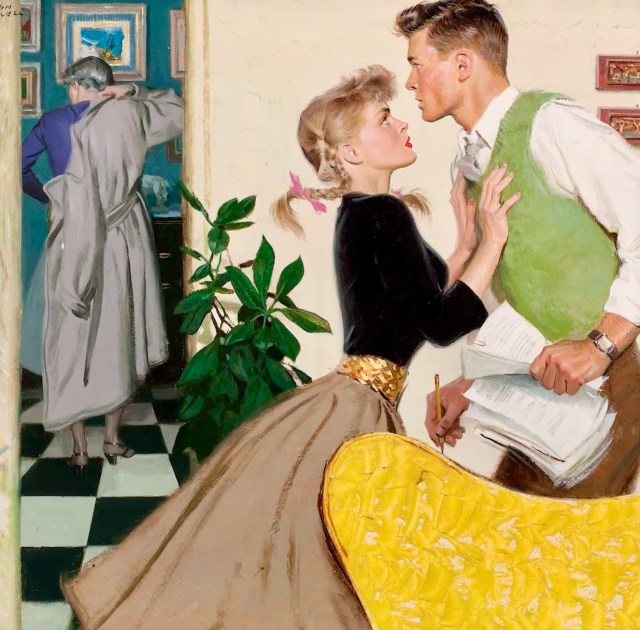
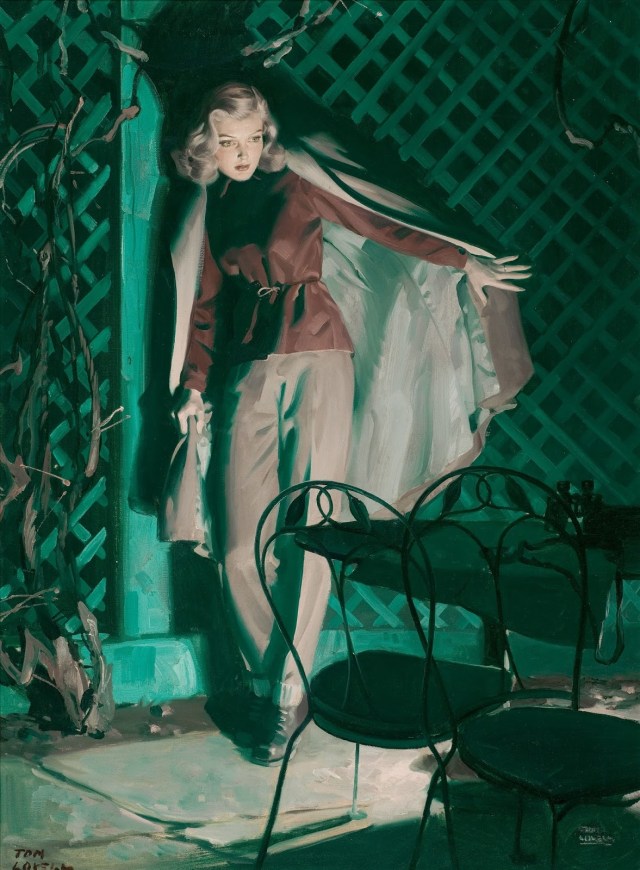
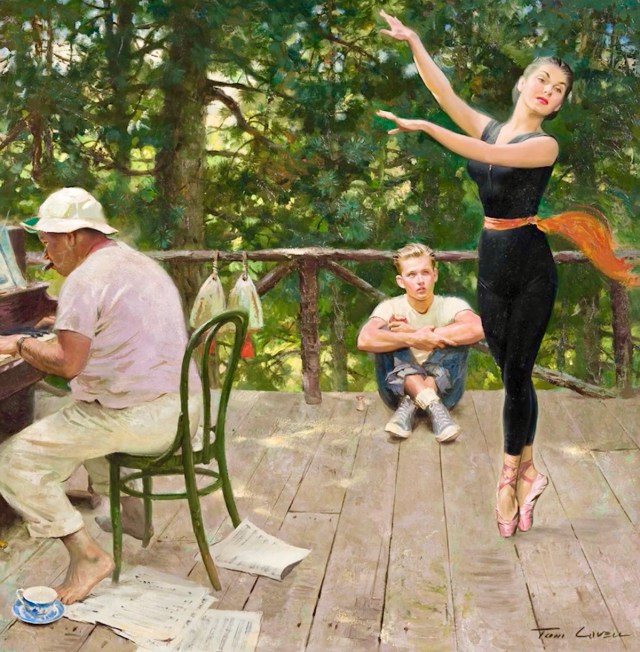
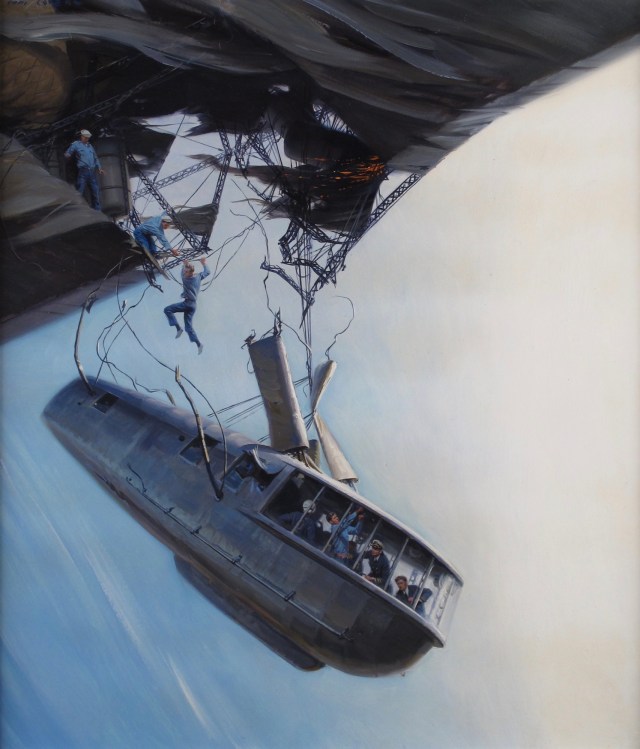
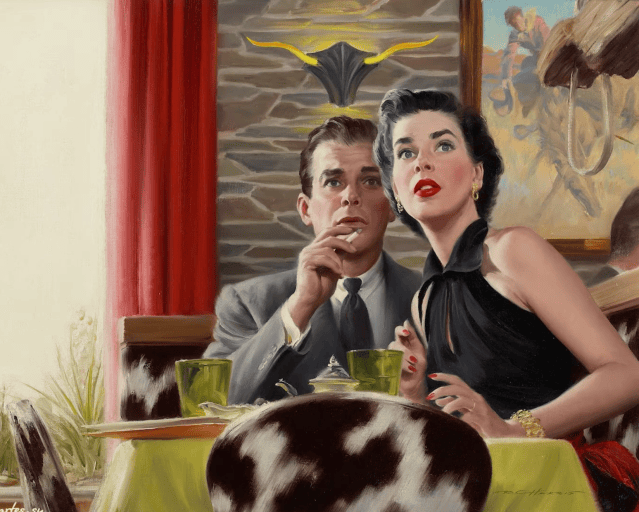
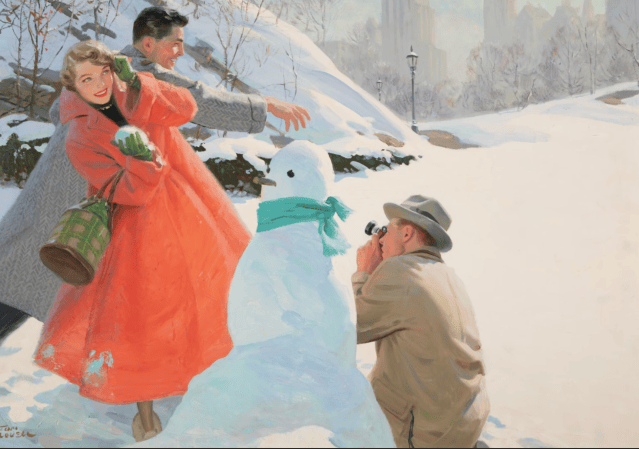
Lovell’s lingering illustrations, separated from their inspirations, inevitably invite speculation. In invite you to use the controls to click through the 19 images in the slideshow below.
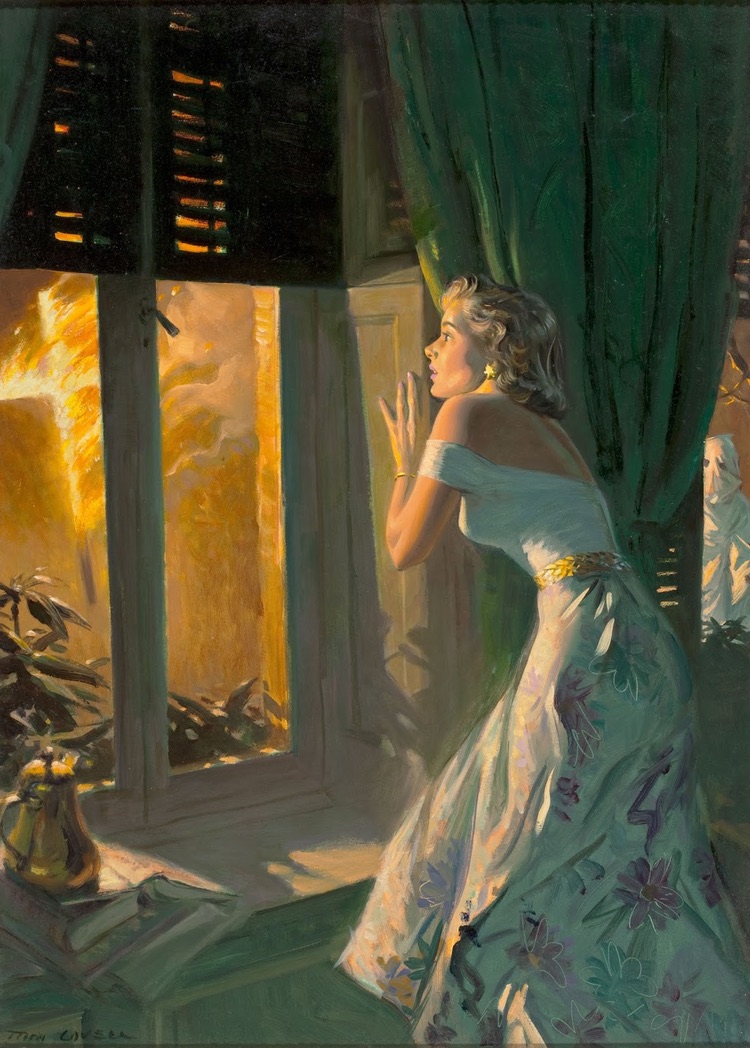
One particular mystery is this painting of a white woman frightened by a burning cross in the yard outside her room. Lovell skillfully directs our attention first to the woman’s face, then the burning cross, and only if we examine the picture more carefully do we spot the hooded Klansman peering in at her. Wouldn’t you like to know what story that is from? I surely would.
An unnerving illustration for an unknown story
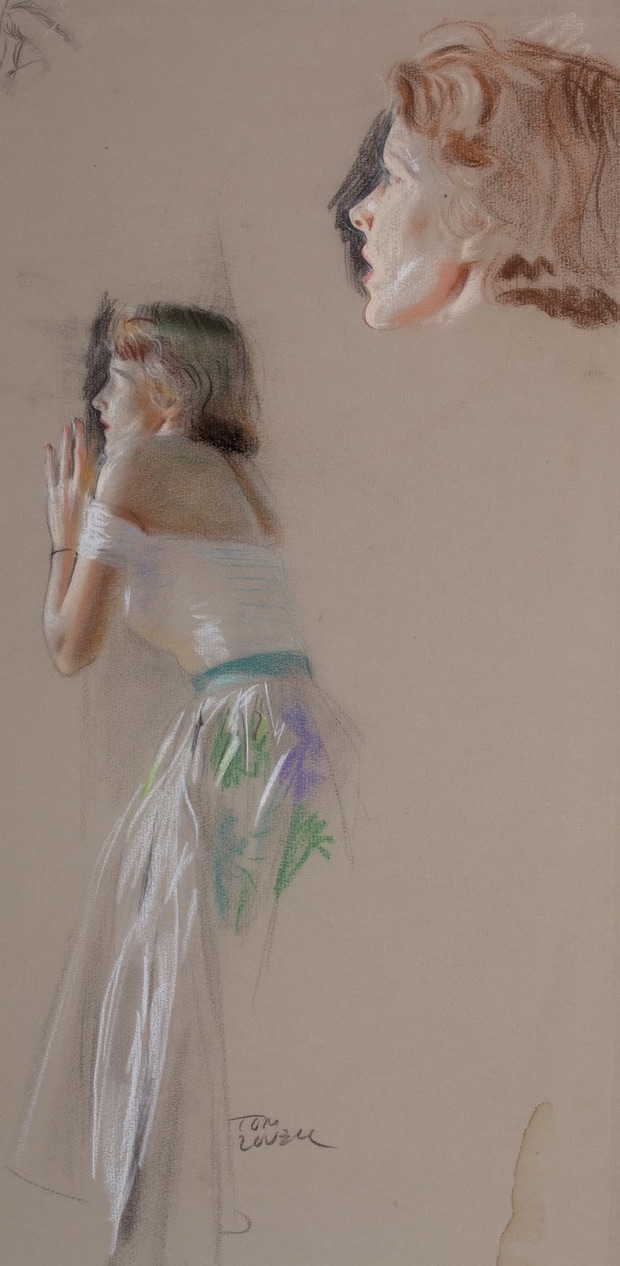
In this case, I located some chalk studies for the piece. Notice how much older the woman appears in them. My guess is that his wife was the initial model, while he adjusted the face in the final painting to better match the accompanying story.
A Final Mystery
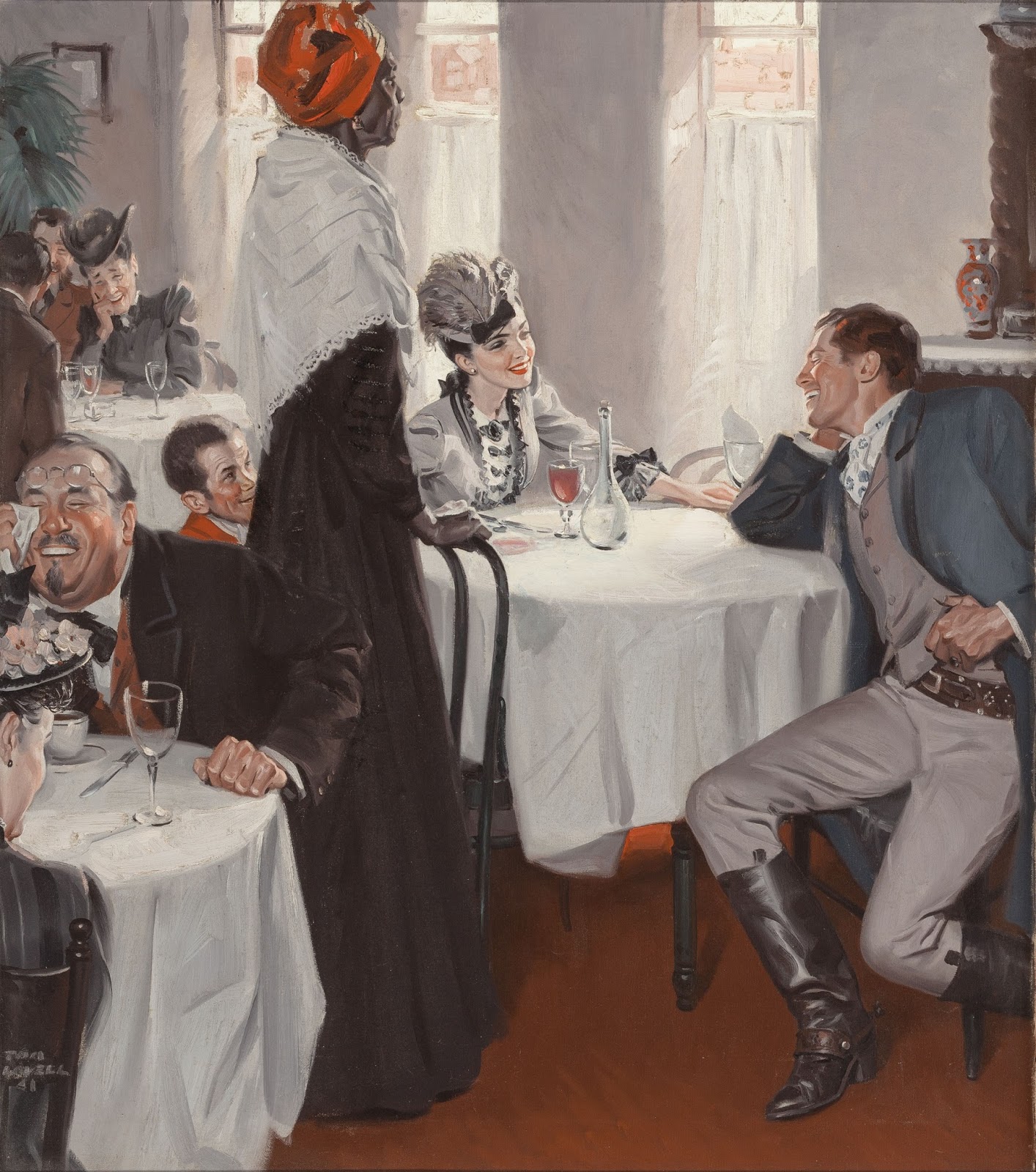
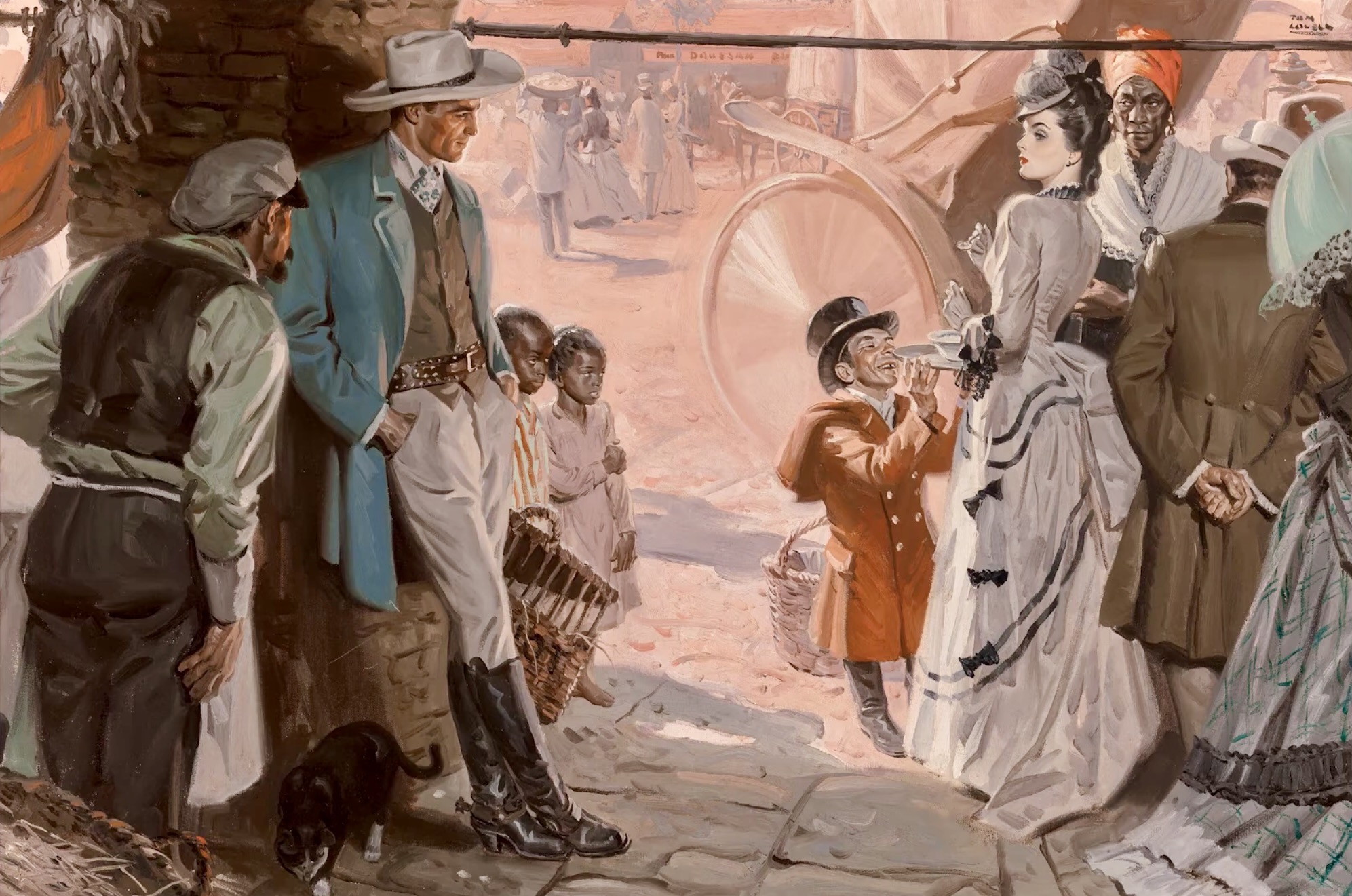
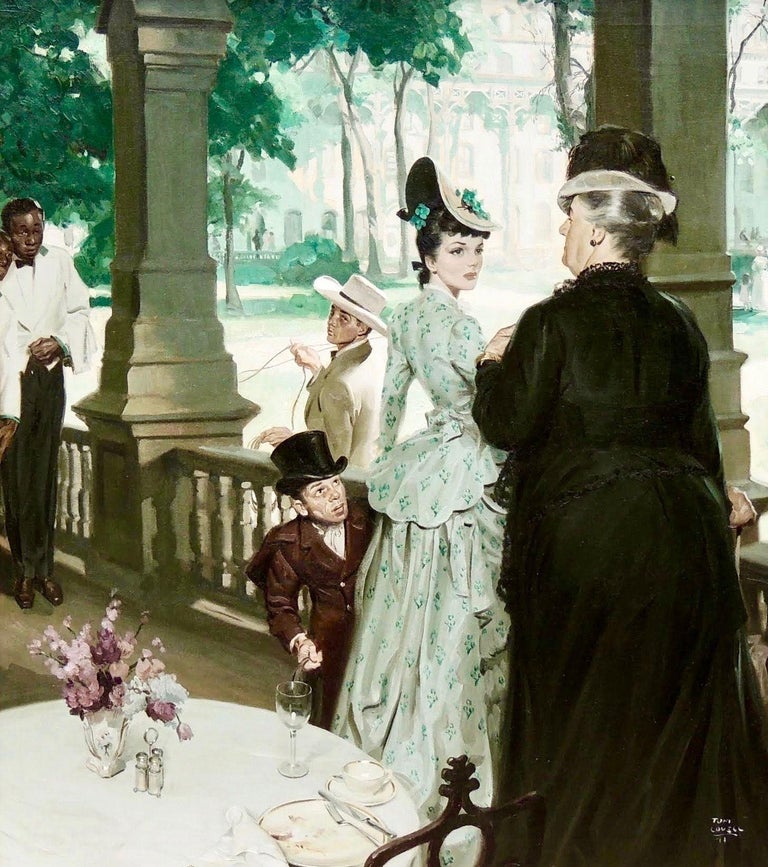
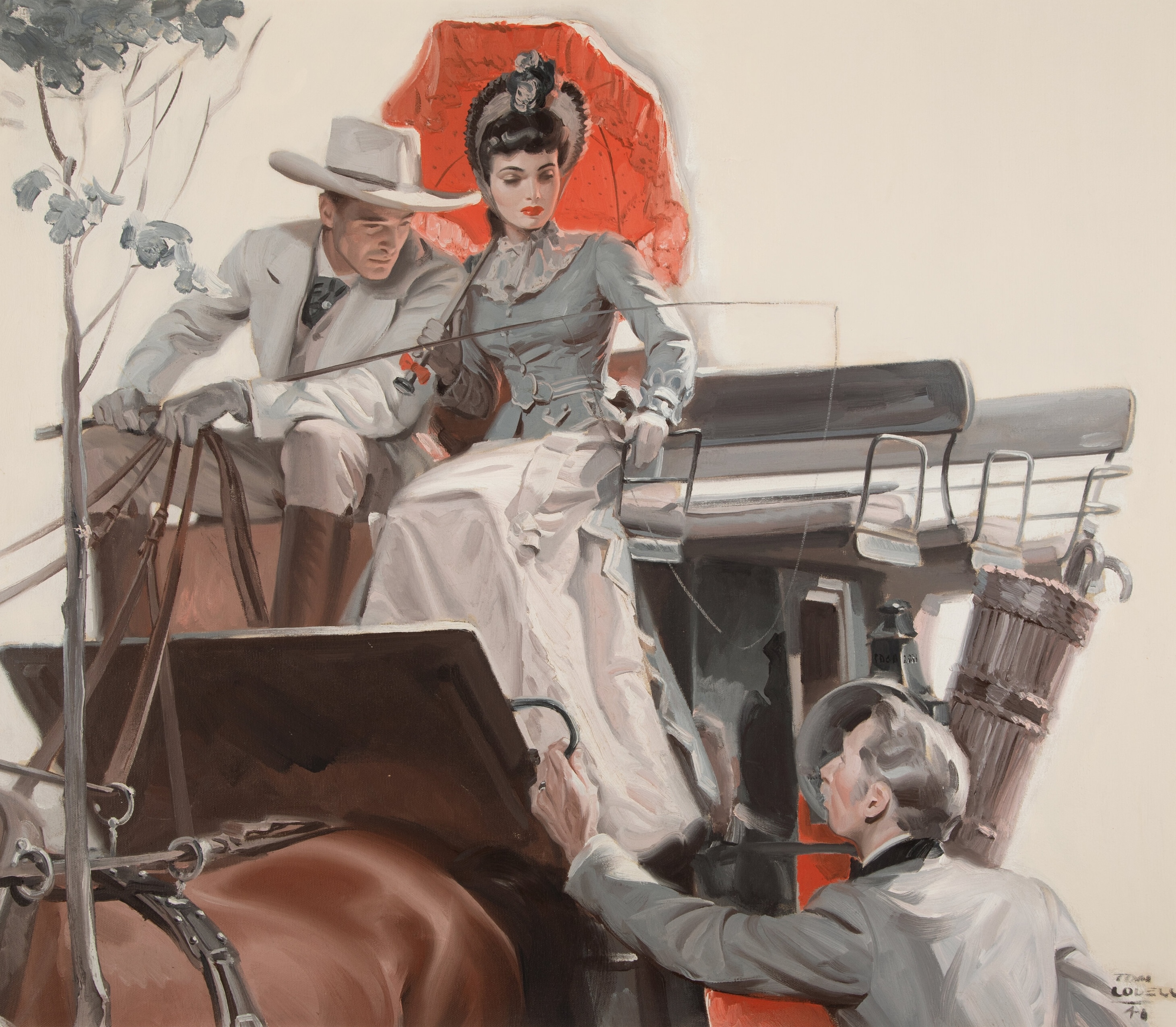
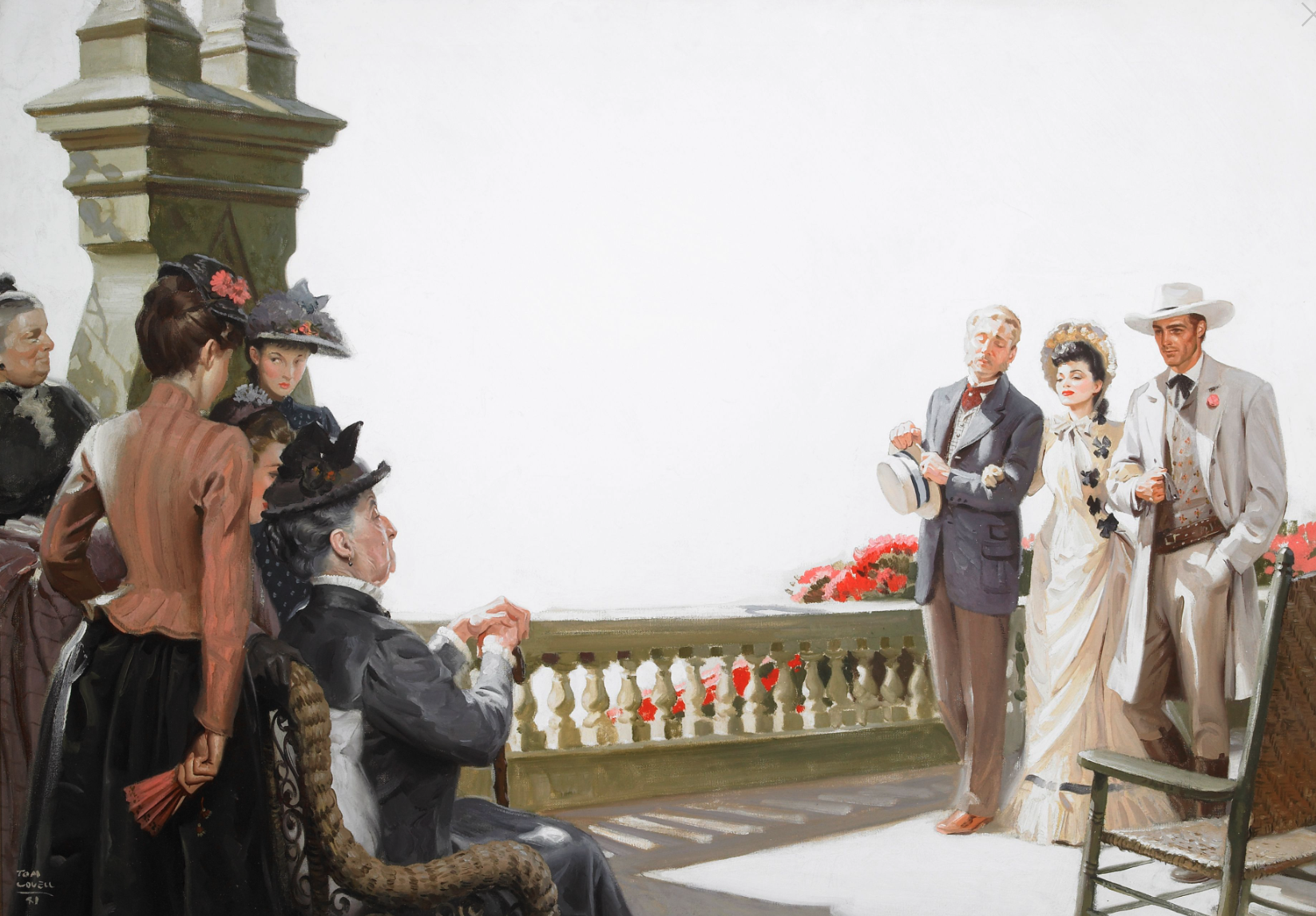
In my gathering of images for this post, I came across two that were clearly from the same story. They include a tall black woman and an older white little person with a young lady in stylish clothes of the late 19th century. I couldn’t help but wonder what story included such diverse characters.
In this case, Google Gemini wasn’t able to figure it out from just the illustrations, but when I added to my prompt that they illustrated a story featuring a tall black woman and a white little person, it deduced they were from Edna Ferber’s Saratoga Trunk, which was serialized in Cosmopolitan in 1941. My knowledge of Cosmopolitan was limited to it being a women’s magazine, popularly called Cosmo, edited for decades by Helen Gurley Brown, and featuring silly romance quizzes.
Well, Cosmopolitan is still hanging on in 2026 after 140 years of publication. It began as a family magazine, and later evolved into a monthly literary one featuring such authors as Willa Cather, Rudyard Kipling, Jack London, Edith Wharton, and H.G. Wells. In the 1940s it was subtitled The Four-Book Magazine since it first section might include a novelette, six or eight short stories, two serials, six to eight articles, and eight or nine special features while the remaining three featured novels and a digest of current non-fiction books. It had sales of 2,000,000 during World War II and could run 150 pages, so I reckon many of its novels were abridged.
After the war, the magazine declined until Helen Gurley Brown became chief editor in 1965 and radically changed it to serve modern single career women. It became racy, contentious, and quite successful. Brown remained editor for 32 years, and the magazine survived the long slow death of print by changing from a monthly to a bimonthly in 2020 and has been published quarterly since 2024.
As for the novel that Lovell was illustrating, Carolyn Kolb wrote: “Clio Dulaine, heroine of the 1941 blockbuster novel Saratoga Trunk, is the beautiful daughter of a free woman of color and her wealthy white partner. Returning to New Orleans from Paris, she styles herself a Countess and has two goals: finding a rich husband and vengeance against her late father’s family (his accidental death while grabbing the gun from her suicidal mother was the cause of the mother’s and Clio’s exile to France). Meeting her match in guile and ultimately her life partner, gambler-cowboy Clint Maroon, Clio scrambles to the top of Gilded-Age society, exemplified by the Saratoga Springs, New York, resort.”
Google Gemini added that the characters I identified in Lovell’s illustrations were “the faithful, unusual servants” who accompany Clio Dulaine when she returns to New Orleans: Angélique Buiton, her tall, fiercely protective West Indian/Haitian maid, and Cupidon, her fiercely loyal manservant and coachman.
Well, I’ve never read a Ferber novel, but I’ve seen Barbara Stanwyck and Bette Davis in the 1932 movie version of So Big, I’ve seen snippets of the movie adaptation of Giant, and I’ve heard of Show Boat as the first serious musical. I also know that Cimarron recently entered the public domain.
A few months before the publication of Saratoga Trunk, Ferber wrote to her editor, “I’ve loathed every writing minute of it … Nothing can convince me that anyone will read this mass of blubber.” Yet the novel was a best seller.
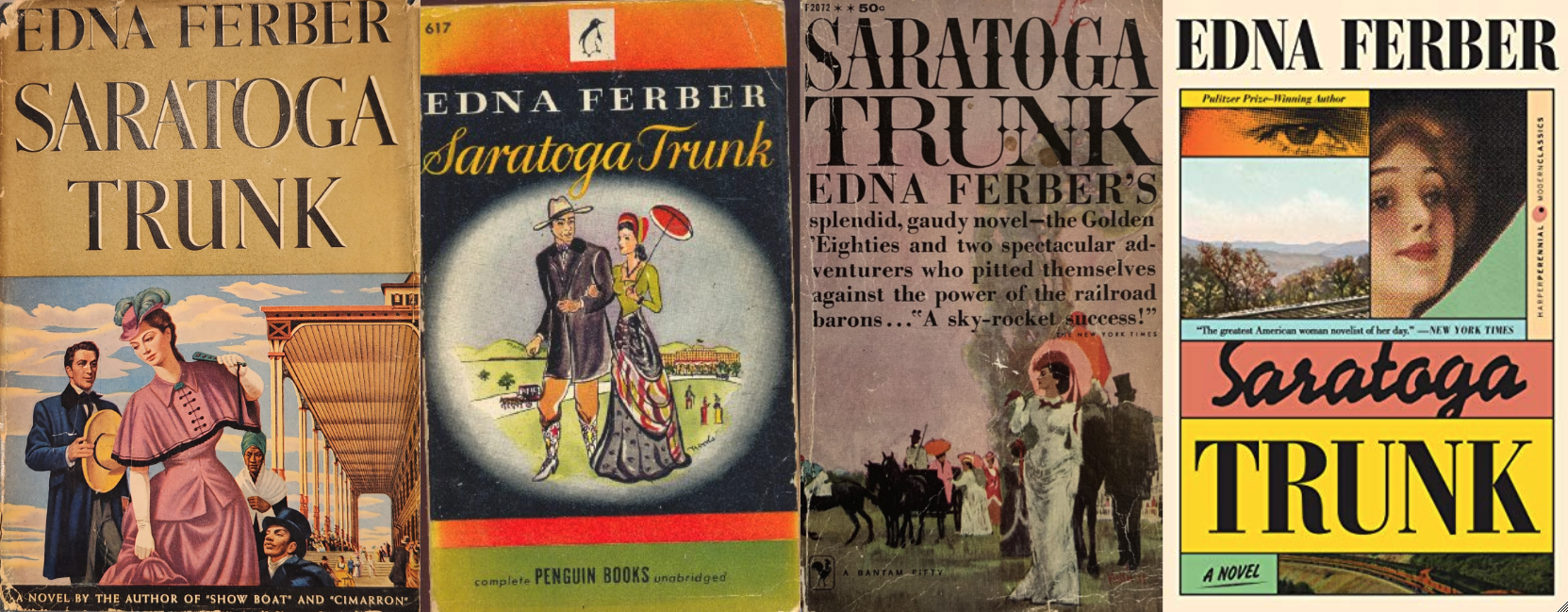
The book covers for various editions don’t approach the quality of Lovell’s illustrations for the serialization
It was also made into a movie starring Ingrid Bergman and Gary Cooper, notable as the only movie in which Bergman sang. I’ve gathered more of Lovell’s work for the serialization by Cosmopolitan, and the five images might tempt me to try my first Ferber novel. I do love Lovell.